




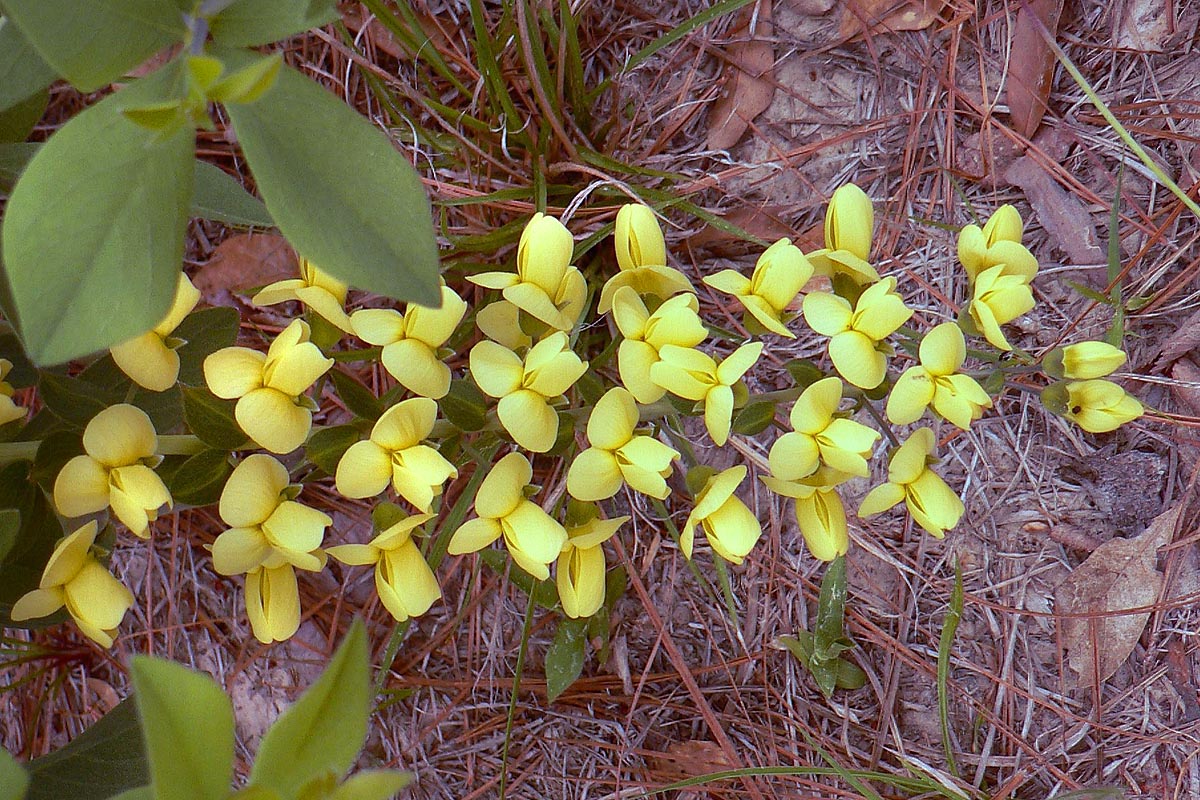
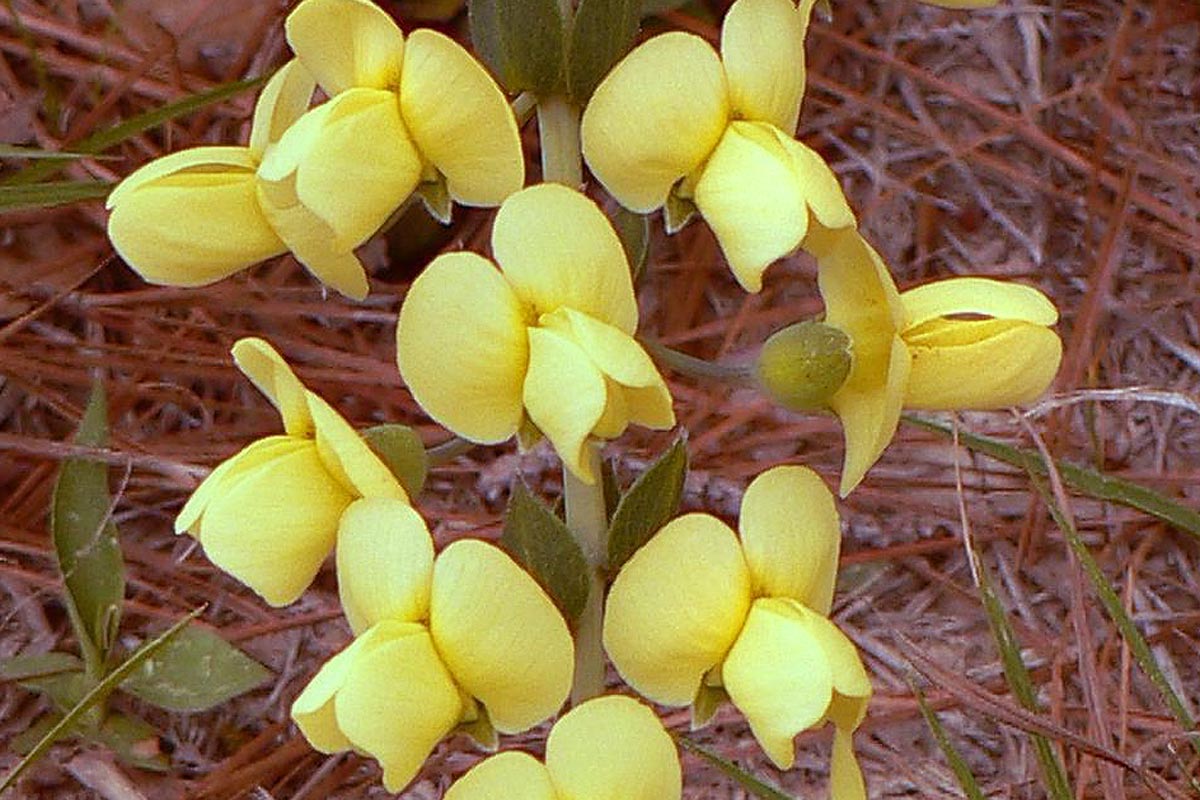
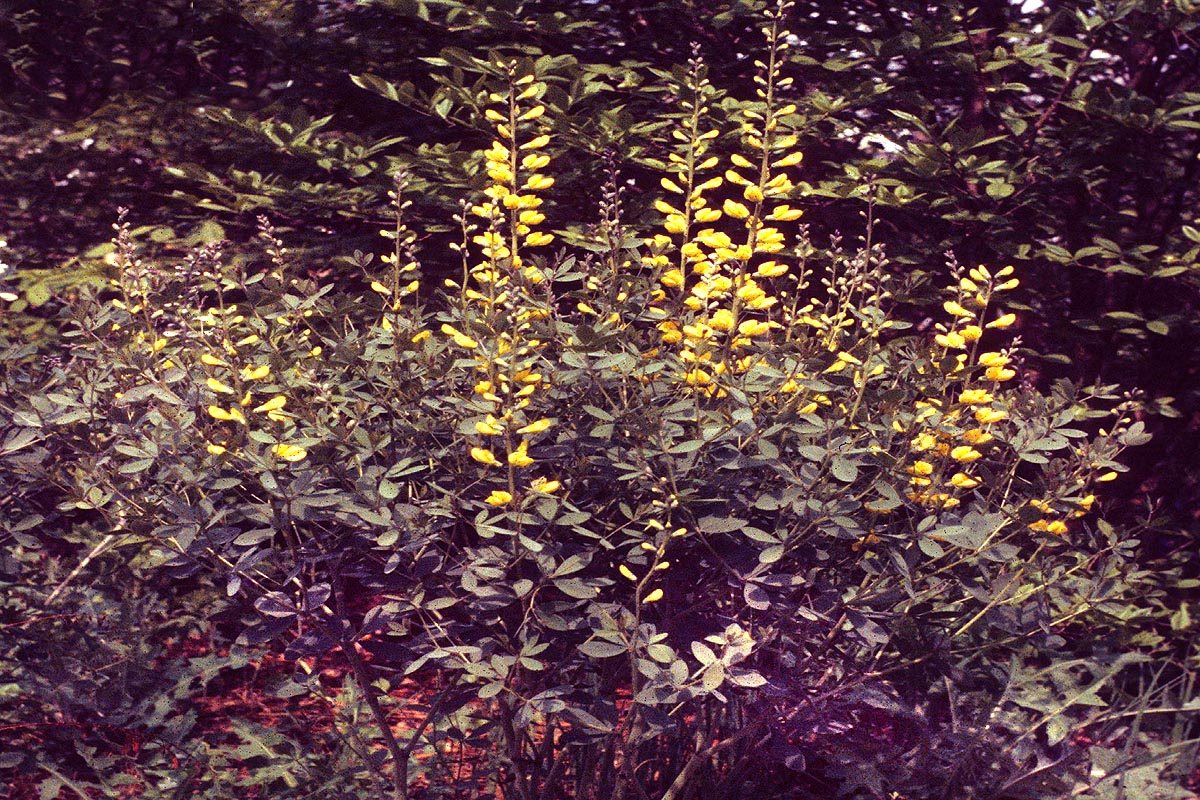
A small Native American shrub that is very hardy up to zone 3 and down to 9. growing to only 3 feet (1m) in height it produces masses of bright yellow flowers from early summer until late fall. Does better on poor soils than rich ones and will grow almost anywhere provided the soil is not wet. Tough, hardy and very drought tolerant once established. Produces a deep tap root and also fixes its own nitrogen so its pretty much set once its planted. It has bitter compounds in the leaves so wildlife don't eat it but pollinators love the flowers. Does best in full sun and will grow in high desert gardens as well as in the deep south. Takes no care once its established. Will need care the first year then sit back and enjoy the flowers.
The pods are very long lasting and can often remain on the bush during the winter, dropping just before the new leaves arise.
Once seeds have been scarified they need to be cold moist stratified. All our seeds are kept in cold storage but are not scarified but this does seem to reduce the amount of time that they need in most stratification. Refer to our Stratification Instructions to determine the best method for your needs. Stratify seeds for at least 4 weeks. Longer is fine but less time will most likely reduce germination numbers. If using any kind of pot we recommend either paper or peat pots as Baptisia does not like to be transplanted.
Sow seeds about 1.4 inch (6mm) deep in sterile a well darning seed mix. This can be done before stratification if intending to place outside or in a cold building. For this method ensure that pots are well watered then wrap in a thick transparent plastic bag and place outside or in a cold building. Check on them regularly to ensure nothing has penetrated the bag. It is very important to use sterile mix for this method or mold spores may be present and begin to grow in the soil. Once spring arrives remove pots from the plastic bags and place in bright sunlight. Ensure pots stay moist they will dry out very quickly. Pots can be placed inside plastic pots to help keep the moisture in during this time.
If planting after stratification again use biodegradable pots. Place in a warm environment in good bright light. Germination can occur within 1-3 weeks but it can be erratic and often take much longer. Germination rates can be as high as 70% if conditions are right. We suspect that most seeds will sprout if given enough time. I have had seeds sprout as late as August and some waited until the following year to do so. Do not give up on pots and stop watering them.
Leave seedlings in their pots until roots begin to show through the sides of the pots. If you used really small peat pots you may want to place this inside a larger peat pot and grow on until the seedling is at least 2-3 inches (5-7.5cm) tall before considering planting out. Plant out only after danger of frost is past.
Hardy to zone 3 will grow down to 9 and tolerate a wide range of temperatures.
Light. If prefers full sun and this is required in zones 3-6a will tolerate some shade in warmer zones although too much shade with produce a more spindly plant and reduce flowering.
Soil. Needs a well draining soil its ideal is sandy loam or gravelly soil. It will grow on rocky slopes with shallow soils. It does not like clay or wet soils although it will survive on clay if on a slope with good drainage. Does not need a lot of organic material and for the most part prefers a poorer soil. Its able to fix its own nitrogen so does not need a lot of help. Overly rich soils can cause it to become too lush and flop over or prone to fungal attack.
Water. needs regular watering for the first year to help get it established but once the tap root is established it does not need watering except in extreme drought. Works well in semi desert gardens that need little water.
Does not need fertilizer in desert style areas or high country a layer of mulch around the roots to help conserve water is recommended but little else is needed.
Insect repellent: In olden times bundles of the leaves were used to repel horseflies from horses this carried over into the home where it was used to repel insects with its strong "medicinal" smell. there are also reports of it begin burned to fend off mosquitoes.
Magic:. Amulets made from the leaves and carried on ones person were thought to protect form evil or harm. It was considered as a "plant guardian".