A tough member of the iris family hardy to zone 3 but can grow down to 8 perhaps 9 if locations is carefully chosen. It will also thrive in moist conditions, not wet its not a water plant, but will grow beside streams, rives, ponds and in rain gardens where it is commonly used. It is often a plant of choice the help stabilize stream and pond banks as it produces thick rhizome roots that can knit the soil together.
It needs full sun for most of its range but some shade in zones 8-9 along with good airflow from breezes to help reduce the heat. It produces lovely blue blooms in late spring that are much prized as cut flowers. The blue green spear like foliage are also used in flower arrangements. They produce a bitter compound that is avoided by wildlife so they don't eat it. Needs almost no maintenance once its established and can be left alone for the most part and just enjoyed. Seeds do need a period of cold moist stratification before they will germinate but its not that hard to achieve.
Description of Siberian Iris (Iris sibirica).
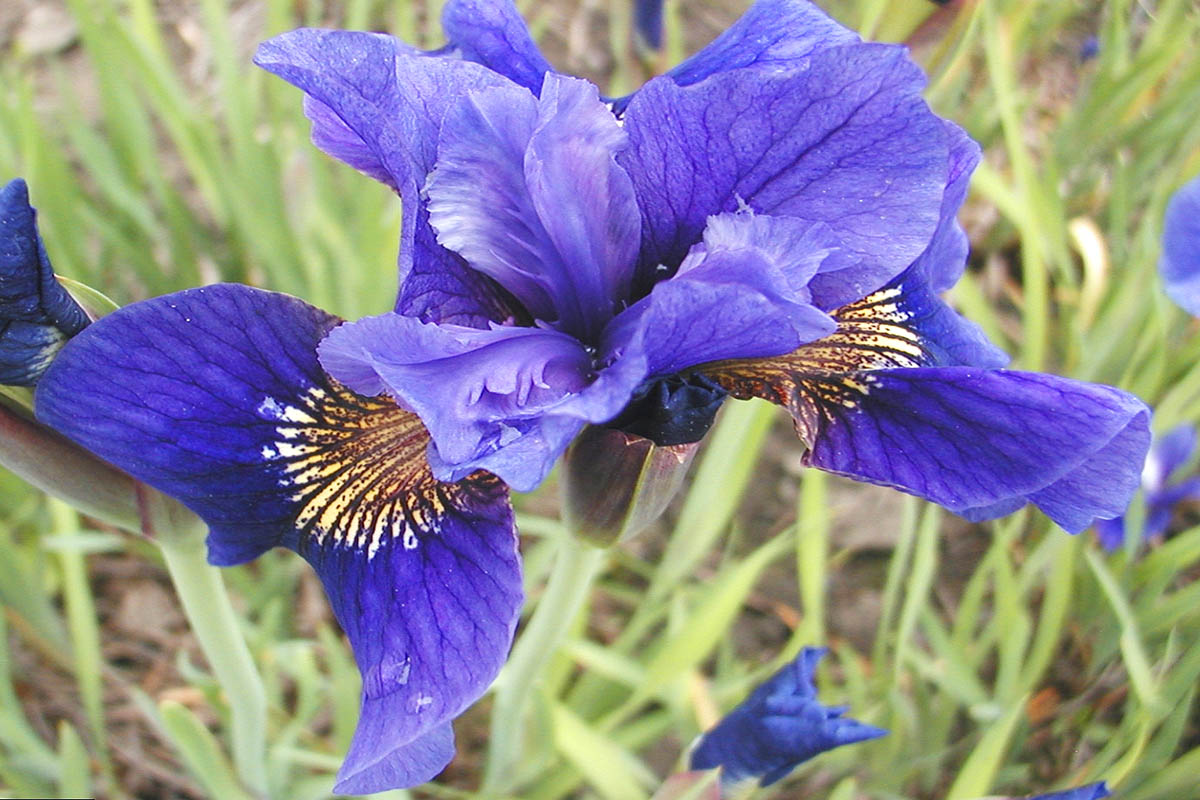
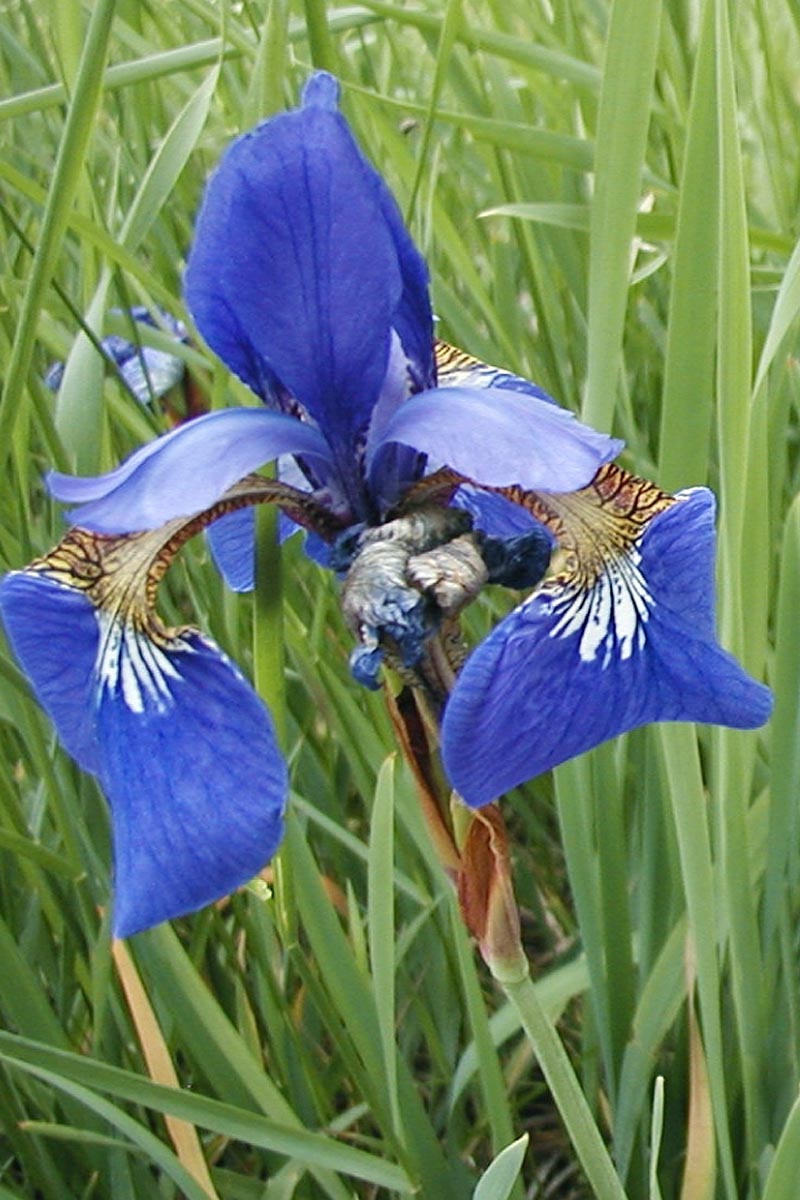
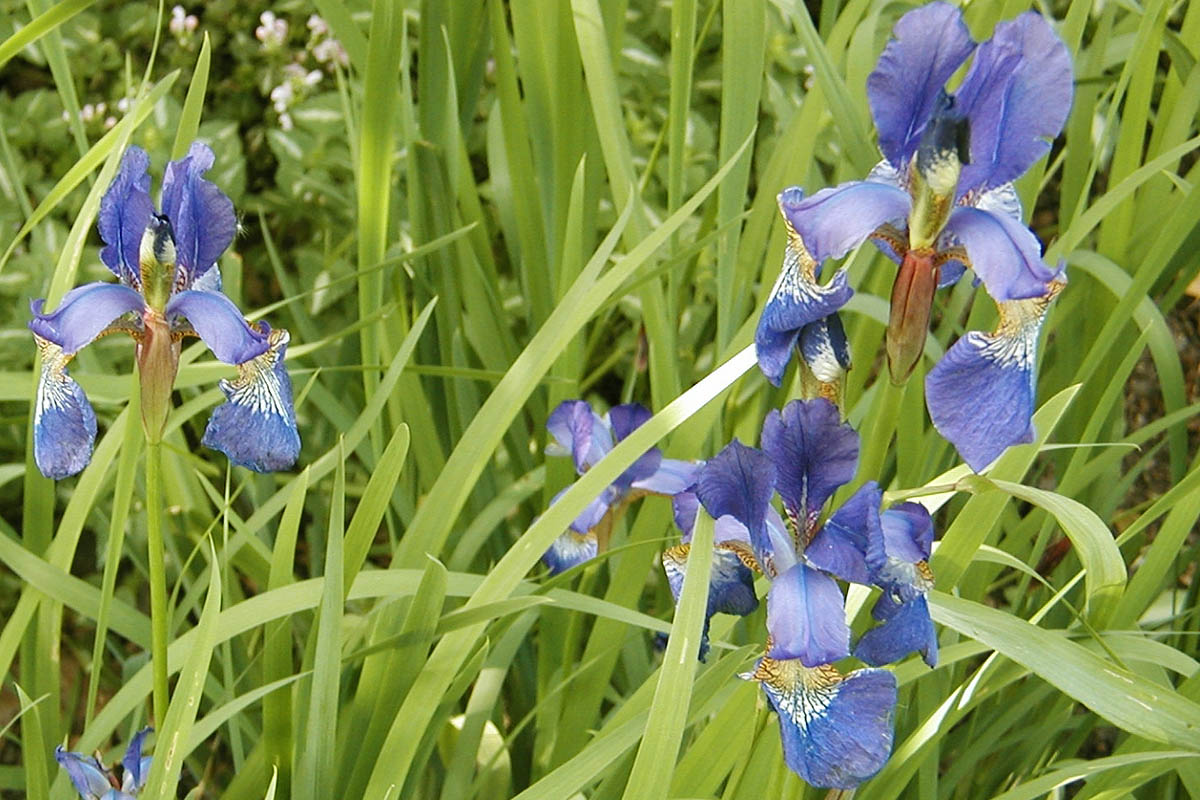
Tough perennial with clump forming habit. The leaves are long slender grass like or sword shaped but about 1 inch (2-3 cm) wide and up to 30 inches (76cm) long. They are mid green to slightly blue in color and form upright clumps. Once leaves have formed in late spring it sends out tall erect stems that can reach 3-4 feet (1-1.2m) in height. These form short branches near the top each with its own large bloom. Flowers are 1 to 3 inches (12.5-15 cm) in diameter. They consist of 3 upright petals known as 'standards' and 3 drooping petals 'falls'. Most commonly they are blue in color with yellow throats. Flowers are followed by long vase like brown seed pods each containing many smaller brown seeds. Leaves remain upright until fall when they turn a yellow cold color and finally droop over. The plant has medium rhizome, roots which will slowly increase in size and length increasing the size of the clump.
Growing Siberian Iris (Iris sibirica) from Seed.
Seeds require cold moist stratification before they will germinate. All our seeds are kept cold but not at present moist. Seeds can be sown in late fall early winter directly in the garden and allow nature to do the work or they can be sown in pots and placed outside or in a cold outbuilding for similar but more controlled stratification. They can also be placed in the refridgerator to artificially create winter. Refer to our
Stratification Instructions to determine the best method for you. Seeds need at least 60 days of treatment but in some cases 120 may be required. Do not attempt less than 60 days but longer times are fine, the seeds just consider it a longer winter.
Once stratification is complete place seeds in a cool location no more than 60-68F (15°-20°C) in good light. Sow seeds no deeper than 0.5 inches (1cm) in good sterile seeding mix and keep moist until seedlings appear. Germination is erratic and can take anywhere from 30 to 120 days so be patient.
Location and Care of Siberian Iris (Iris sibirica).
Its called Siberian Iris because it will grow up to zone 3 but also down to 8. Location is going to depend on your zone. In cold zones 3-4 it will need full sun with some shelter from winds if they are strong in your area. zone 5-7a still full sun but in almost any location zones 7b-8 in some cases 9 some shade from noon sun is recommended. A location that has good breezes and morning and/or afternoon sun is ideal. this is cold region plant so will not do will in hot humid climates. It can survive well with that little shading and breezes to keep it cool in the worst of the heat in other areas.
Soil. Its not fussy and will grow in almost any soil type that is well draining, but does not dry out completed. This is not a drought tolerant plant. It will also not survive in wet soils which will rot the rhizomes. Its ideal soil is most fertile soil that stays slightly moist. Heavy soils will need to be amended with organic matter to improve fertility and drainage.
Water. It will need regular watering in areas that don't get enough rain. It is not drought tolerant. An ideal spot for it is beside a stream, lake, pond or rain garden provided rain is plentiful and the garden will not dry out. It will tolerate occasionally wet solid but not waterlogged for any time.
Pollinator and Wildlife with Siberian Iris (Iris sibirica).
While pollinators visit the flowers and they are plentiful they are not enough for it to be a major pollinator plant. It does produce some tough compounds that make it unpleasant for deer and rabbits so its not usually bothered by wildlife.
Culinary and Medical uses
There are none.
Other uses of Siberian Iris (Iris sibirica).
Cut flowers. its commonly grown for use as a cut flower as the blooms can last for several days and since it will tolerate more moist areas than some other irises it can be grown in locations that others of this species cannot. The foliage is also used for texture in many arrangements.
Dried flowers. the seed capsules are long and interesting and can be used in dried flower arrangements.
Dye. Flowers have been experimentally used as a natural dye. Not as commonly used but a good potential as a source of blue/purple dye for textiles.
Other names. Siberian flag, beardless iris, Northern flag