





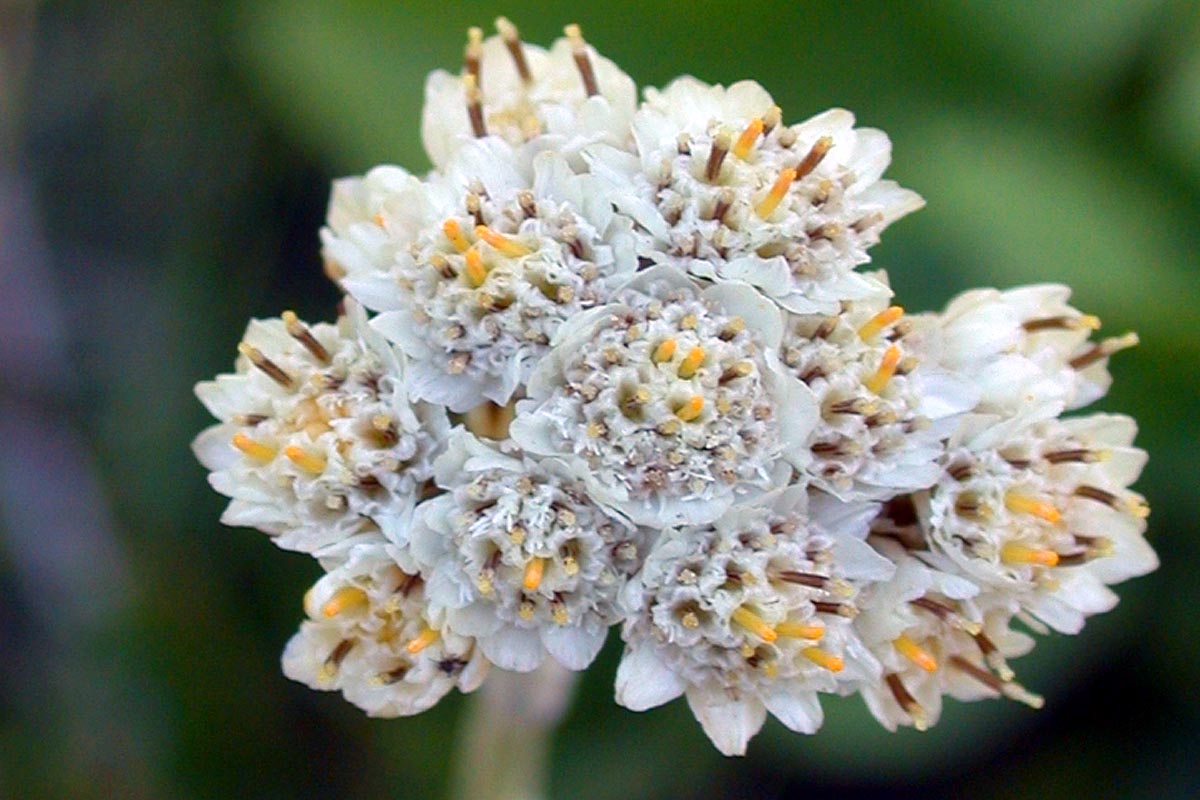
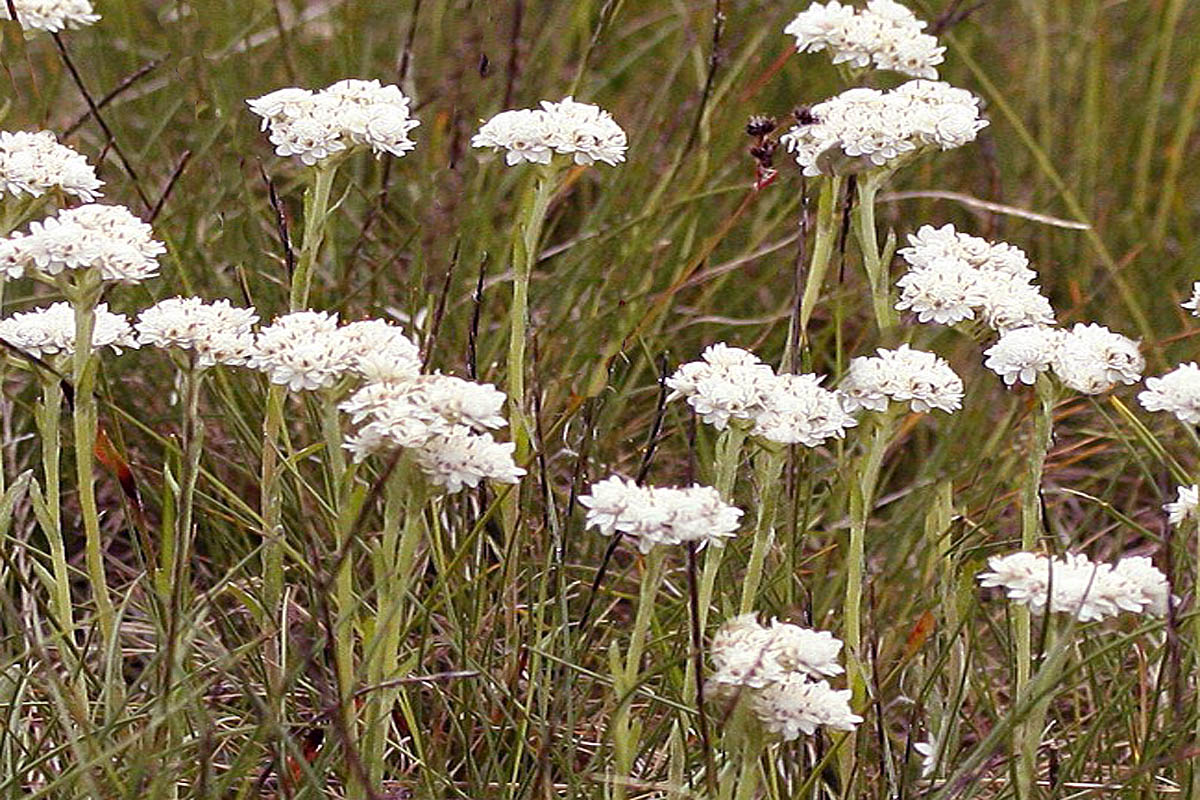
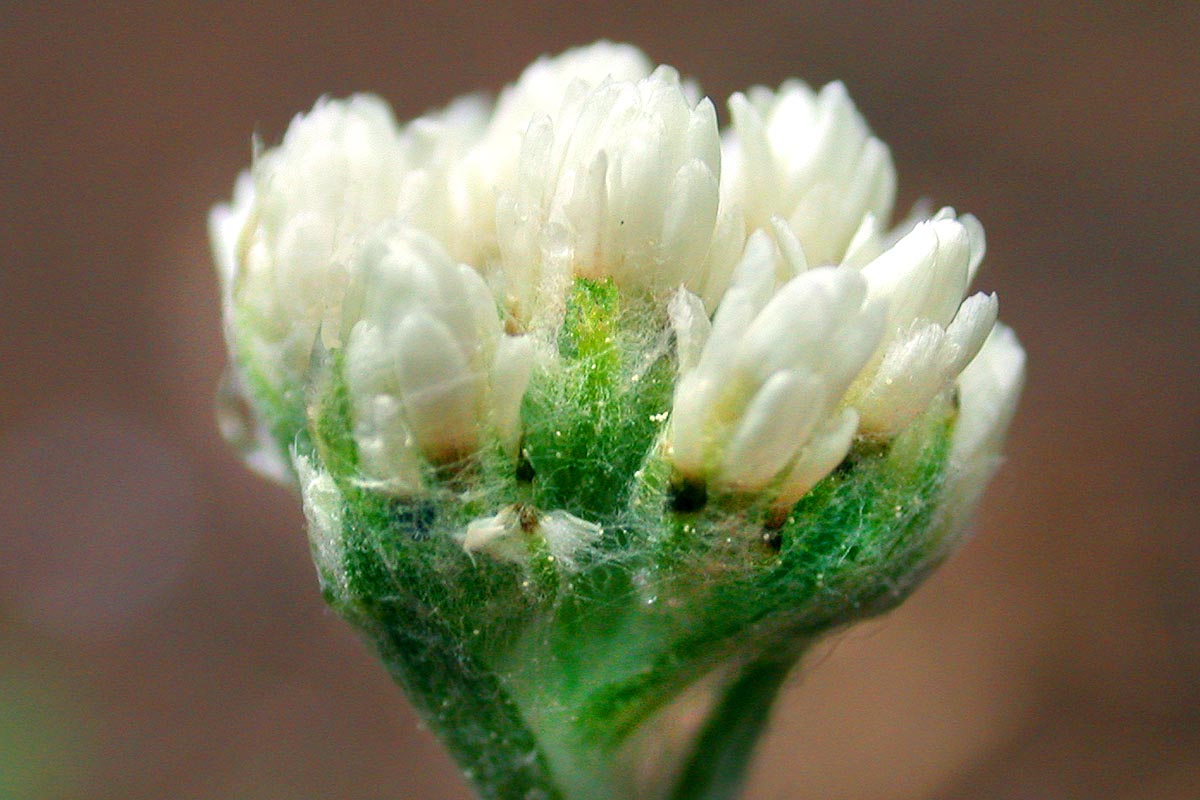
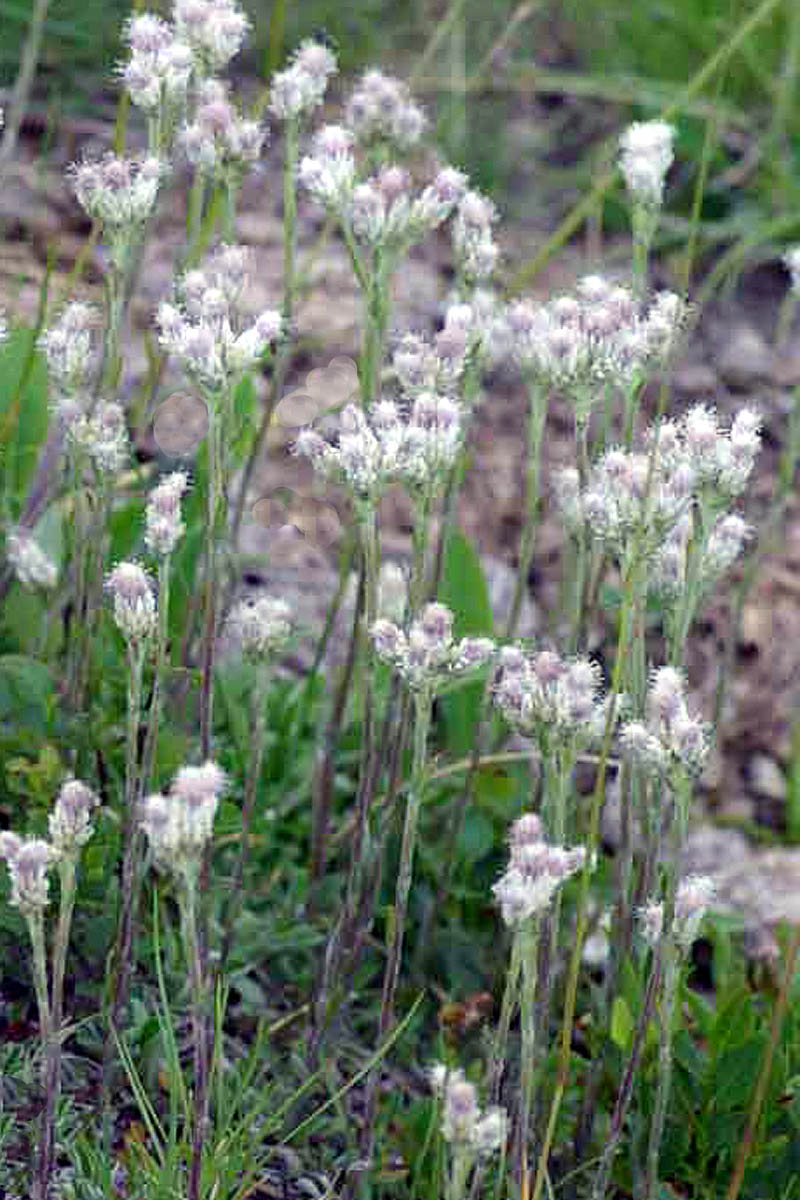
Tough little evergreen perennial for dry areas. While small in size it forms flat rosettes of evergreen leaves that once established beat out all other plants so forming an ideal ground cover in areas of poor soil and little rainfall. Ideal for sandy or rocky areas with little soil covering also for rockeries, raised stone gardens and green roofs. This little plant is hardy to zone 3 and prefers cooler dry climates its not a plant for hot humid areas. It needs full sun for most of its range but some shade in zones 6b and warmer. In late spring it produces lovely little white to pink flowers that resemble fuzzy cat toes - hence the common name - on about 2 -8 inch (5- 20cm) stems. Flowers can last for two months and often stay on the plant as dried flowers producing an interesting look for longer. Plants are dioecious meaning there are male and female flowers with the females tending to be more pink and the males white. Seeding produces a mixture of both which many think is far more attractive. Once established these tough little plants take no care and are perfect ground cover in areas of poor soil. It does not like a lot of water and will quickly die in moist soils. The leaves are a silvery blue gray color with matted hairs on the underside which deer really dislike so after a first taste they tend to leave it alone.
Germination time. Can take time to germinate so patience is needed. While some seeds can sprout in 3-4 weeks others may take up to 3 months to decide to grow. So don't give up on your trays/pots and stop watering them. Keep them evenly moist at all times but not totally wet. While clear covers can be used to hold in humidity use with caution as they also hold in mold spores that just love those conditions and can decimate your seeds and new plants.
Seedlings are very tiny and delicate do not attempt to transplant them until they have grow large enough. If they have grown in clusters move the carefully by digging up gently and carefully separating them. Make sure you don't break their new leaves as they have trouble recovering from damage at this stage. We recommend using small cell seed trays were each seed or small group have their own cell. This ensures that seeds have their own space and do not disturb other still slumbering seeds when they are transplanted.
Use a slightly gritty well draining soil a mixture of sand, loam and some peat is ideal. Grow them on in a sheltered spot until they are large enough to transplant out.
For more details about starting seeds see our General Growing Instructions.
Light. Will depend on zone. In zones 3-5a full sun is recommended. This will give compact growth and abundant flowers. In zones 5b - 7b some shade especially from noon sun is highly recommended. Somewhere that gets morning or afternoon sun is ideal. In zone 8 more shade, north side of structures or hedges that is light, possibly dappled and has plenty of cool breeze will be essential. If it can also be exposed to some morning or evening sun that would be ideal for this zone.
Soil. It needs a well draining soil and cannot tolerate wet soils. It will grow on sandy and rocky soils with ease and is happy in poor soils that are low in nutrients. Sandy soil is pretty much essential and does well in rockeries or small above ground rock gardens as it will keep is diminutive size in such structures. Rocks made of limestone or other alkaline choices is ideal as it likes a slightly alkaline soil but will grow in soils up to mildly acidic. If enhancing soil create a mix of sand fine gravel and some loam. Does not do well in strongly organic or clay soils. It will not tolerate wet soil and will soon die. Wet winters can be a major problem so in such areas planting on a well draining slope can be ideal. Over time it can cover such slopes making and ideal ground cover.
Water. It will need gentle watering when first transplanted to ensure establishment then should not need any water. It is very drought tolerant. Water occasionally if rainfall is low until you see the leaves increase in size and new plants arising close to the old showing that the stolons are growing under the soil. After this is should be fine alone unless there is an excessive hot drought. Its low water needs and shallow roots make it idea for growing on rock surfaces, rain gardens and green roofs.
Nutrients. It actually prefers poor soils. Soils with lots of nutrients tend to make is lush and soft but also allow other plants to out compete it. This is a plant for harsh soils in poor conditions. No extra work required.
Care and Maintenance. Once established this plant takes care of itself and really needs no help at all. However getting it there can take a little effort. Watering after transplanting a little, not to much is helpful and weeding around new young plants. They tend to be slow to establish and other plants and out compete them at this stage. Also slugs and snails seem to like the young leaves. Once they grow older the leaves are less palatable so they will need protection with slug barriers in spring when areas are more moist. Once summer arrives and things dry out slugs tend to retreat. Once the leaves have grown their ground covering rosettes of leaves that stay green all year their is nowhere for weed seeds to germinate and the plants can outcompete all comers. Then there is nothing you need to do.
If plants get overcrowded it may be prudent to remove some to allow more space and transplant the others to a new area to colonize.
potpourri.
Moth repellent. Not in much use today when most clothing is synthetic but was commonly used in older times to keep moths from eating natural fibers that clothing was made from. Tucked into pockets or laid in layers in drawers to repel the insects. While less effective than moth balls it also does not have the lingering odor.