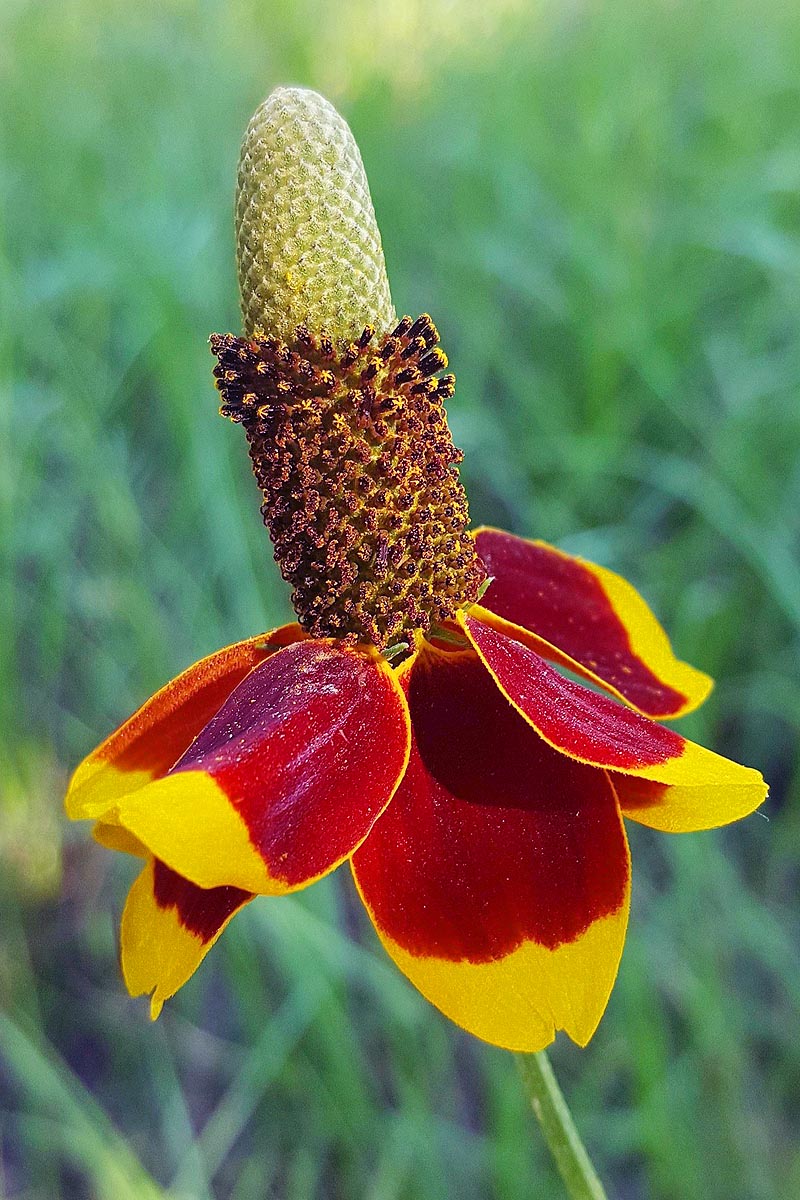
Excellent Native American plant for hot dry areas. Prairie coneflower or Mexican Hat is very drought tolerant and thrives on poor soils provided they are well drained. A native of the great plains and grasslands its used to full sun, poor soils and low water its hardy to zone 4 but will grow down to zone 9 in right condtions. Forms small compact clumps that increase is size over the years. The flowers which can bloom for several weeks to a couple of months brighten any area with the bright yellow blooms. Creates a strong root system and does not like to be moved once established. Takes virtually no maintenance, unless you want to mow it down once a year to keep the area or meadow functional and remove any unwanted weeds. Ideal for slopes and hot dry areas that may be difficult to deal with. Fairly easy to grow from seed and will increase in size due to underground stolons or often self seed. The whole above ground plant has a smell of anise when crushed which makes it less palatable to deer although they will eat the flowers.
Description of Mexican Hat (Ratibida columnifera).
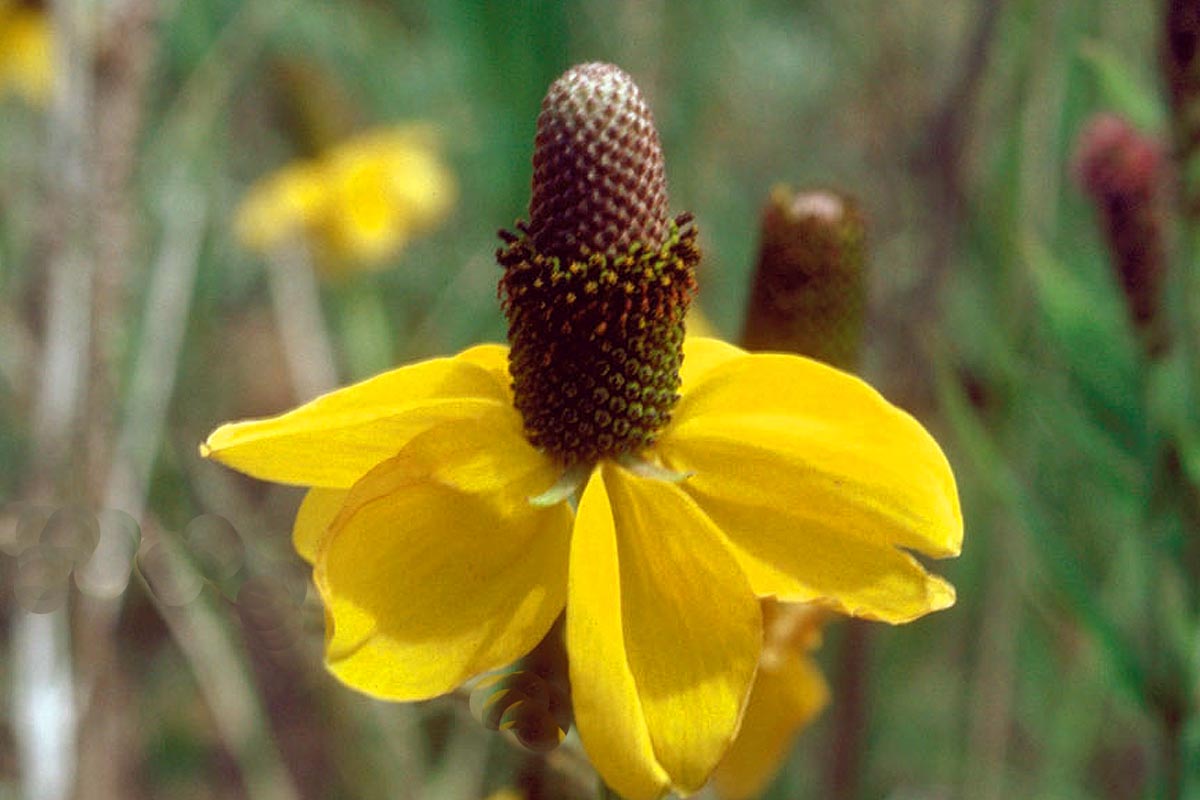
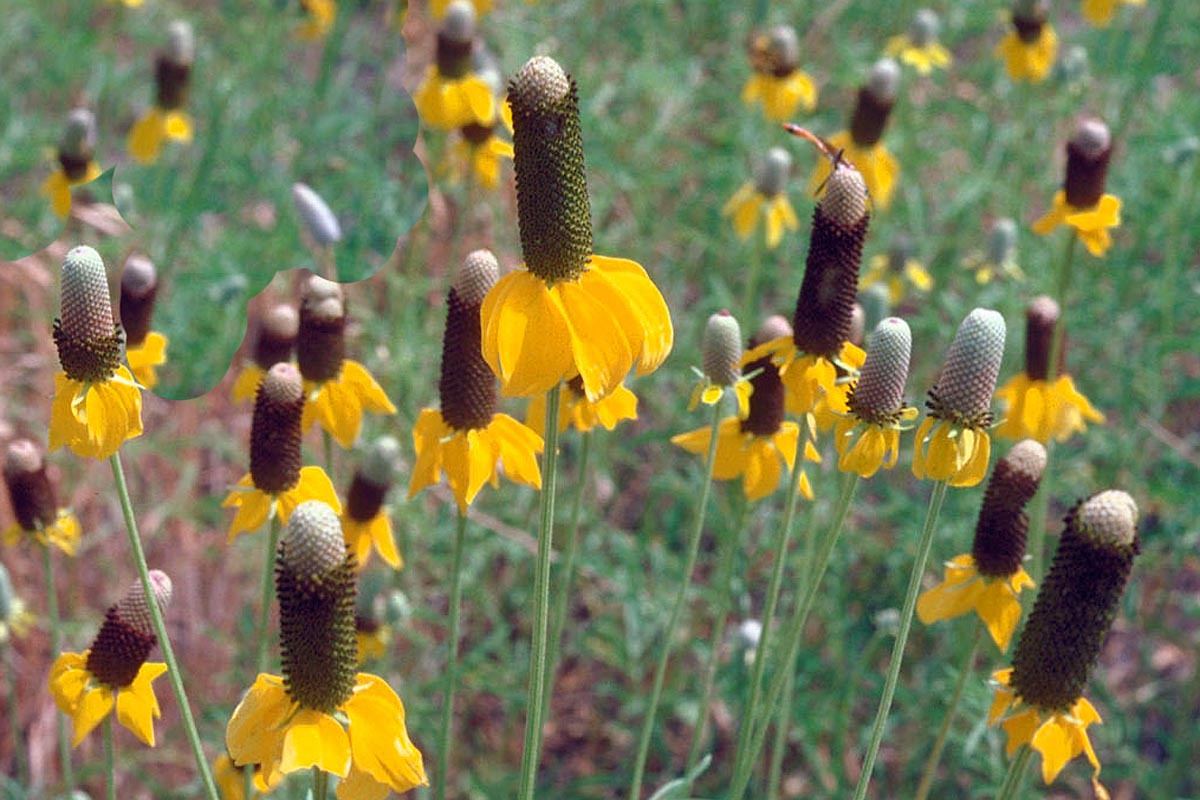
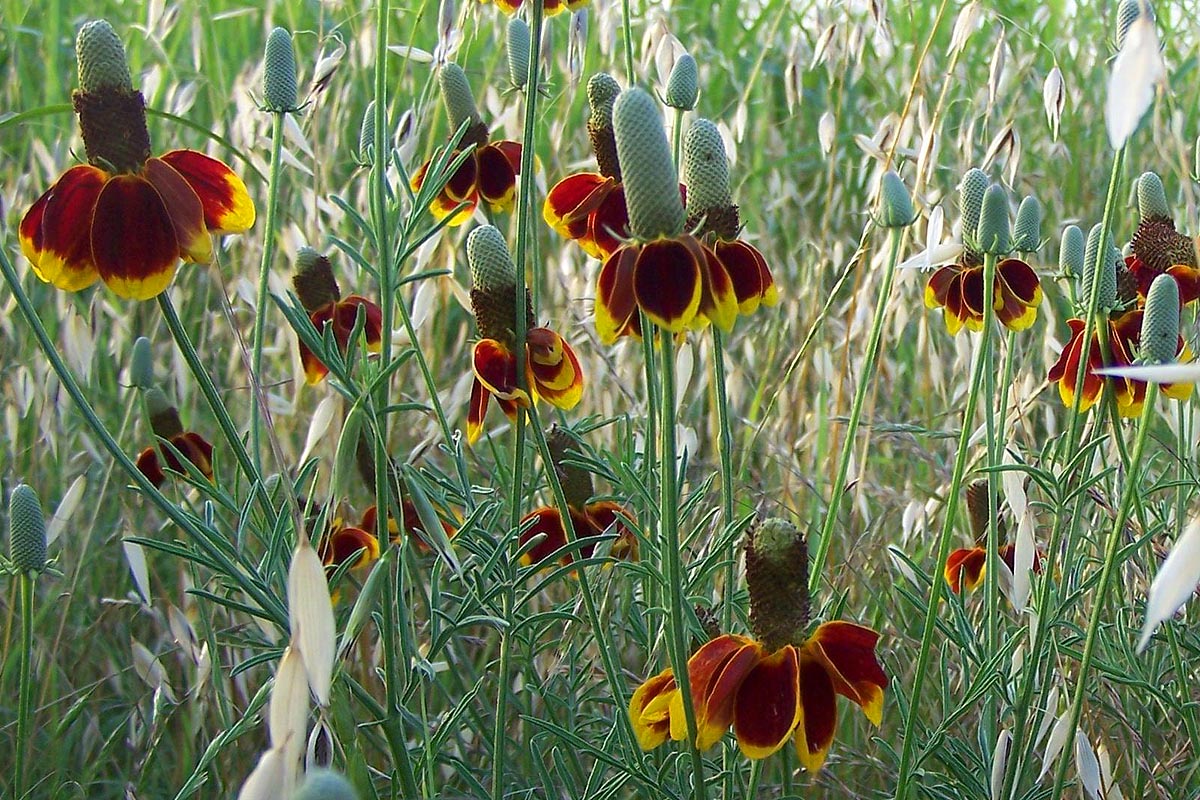
Hardy Native American perennial that grows in small clumps. The leaves are up to 6 inches (15cm) long with a very feathery appearance. They look compound but actually its all one leaf that is so deeply lobed that it goes all the way to the central vein bisecting into 5-13 segments with a rough stiff surface. Leaves are arranged alternately on much branches short stems forming a tight low growing clump. From this in early summer rise long thin stiff bare stems up to 15 inches (38cm) tall, each of which terminates in single inflorescences. Each has 4-12 drooping bright yellow, (but occasionally reddish-brown) petals or ray florets each with a notched tip that surround an erect central cone. The cone can be up to 1.5 inches (3.4cm) long and this is what actually contains the flowers. Each of which is tiny brown to purplish disk flowers with yellow stamens that bloom from the base of the cone to the top. The cone begins as gray green but darkens as the flowers develop and open. Since the cones take while to bloom fully it gives the appearance of each 'flower' lasting up to several weeks and blooming can last for months. Flowers are followed by small tiny brown seeds. The whole plant when crushed smells of anise or licorice.
Growing Mexican Hat (Ratibida columnifera) from Seed.
Small seeds so sow carefully see our
General Growing Instructions for details on how to handle small seeds. Sow in fine sterile seeding mix close to the surface, cover with only a very light coating of fine seeding mix and keep moist. Place in good light at around 59 F (15C).
Seeds germinate better after a period of cold.
We keep all our seeds at cold temperatures (so they think its winter) so they are ready for you to plant. We recommend you keep them in the refridgerator until you are ready to proceed. Germination can take up to 4 weeks sometimes longer, so be patient. Once seeds have germinated allow them to reach a good size before transplanting into larger pots. When they reach 4-6 inches (10-15cm) they can be planted out. Take care when transplanting as they produce a strong tap root and its important that it not damaged during the move. Damaged roots can stunt the plant and stall growth. Usually flowers second year from seed and increases in size from then on.
Location and Care of Mexican Hat (Ratibida columnifera).
Produces a long hardy tap root so its not easy to move once its established. Choose location carefully. This tap root makes it a very hardy plant growing from zones 4-9 its native to the northern grasslands so thrives in full sun and well drained soils. It is tolerant of windy conditions but does not do well in confined spaces in hot humid climates so not a good plant for south eastern United States. Needs good airflow its used to wide open plains and does not do as well in confined spaces especially when they are hot and humid. Idea for meadows, slopes, banks and other open areas or as ground cover in hot dry areas with poor soil and low water.
Soil. Needs to be well draining does not do well on wet or compact soils. Will tolerate poor soils even rocky and gravel. Not to fussy about pH and will even tolerate salt.
Water. Will need watering occasionally when first transplanted or seeded until established then none at all. Is very drought tolerant once established and will only require water in extreme drought.
Light. Full sun is preferred in all zones. Light shade can be tolerated in warmer zones (7b-9). Only dappled shade with possibly some shade from noon sun.
Maintenance. Almost none. Ideal for 'mow it down' gardens. will rebloom in most zones if cut down after flowering. Unsure if this will occur in zone 4.
Pollinator and Wildlife.
Attracts bees and butterflies to the nectar and birds love the seeds.
Culinary Uses of Mexican Hat (Ratibida columnifera).
Some indications that the leaves and flowers are used to make a tea which several sources state as "pleasant" flavored. I have not tried it yet.
Medical uses of Mexican Hat (Ratibida columnifera).
Generally not used in modern herbal practice however some Native American tribes used the plant tops as a tea to help with stomachaches and headache and general pain. A decoction of the leave and stems were used externally for treatment of rattlesnake bites and poison ivy rash.
More recent experimental research has show that the plant does have Analgesic/anti-inflammatory properties as well as some sedative potential and possible anticancer uses but far more research is required.
Other uses of Mexican Hat (Ratibida columnifera).
Dye. The bright orange ray flowers yield a gold dye on boiling.
Lakota horse breeders fed the plant whole to horses for urinary tract infections and other tribes used the sap to make a salve for saddle sores
Other names.
Mexican hat, prairie coneflower, thimble flower, upright/long-headed coneflower, yellow coneflower, red-spike Mexican hat, woolly coneflower.