




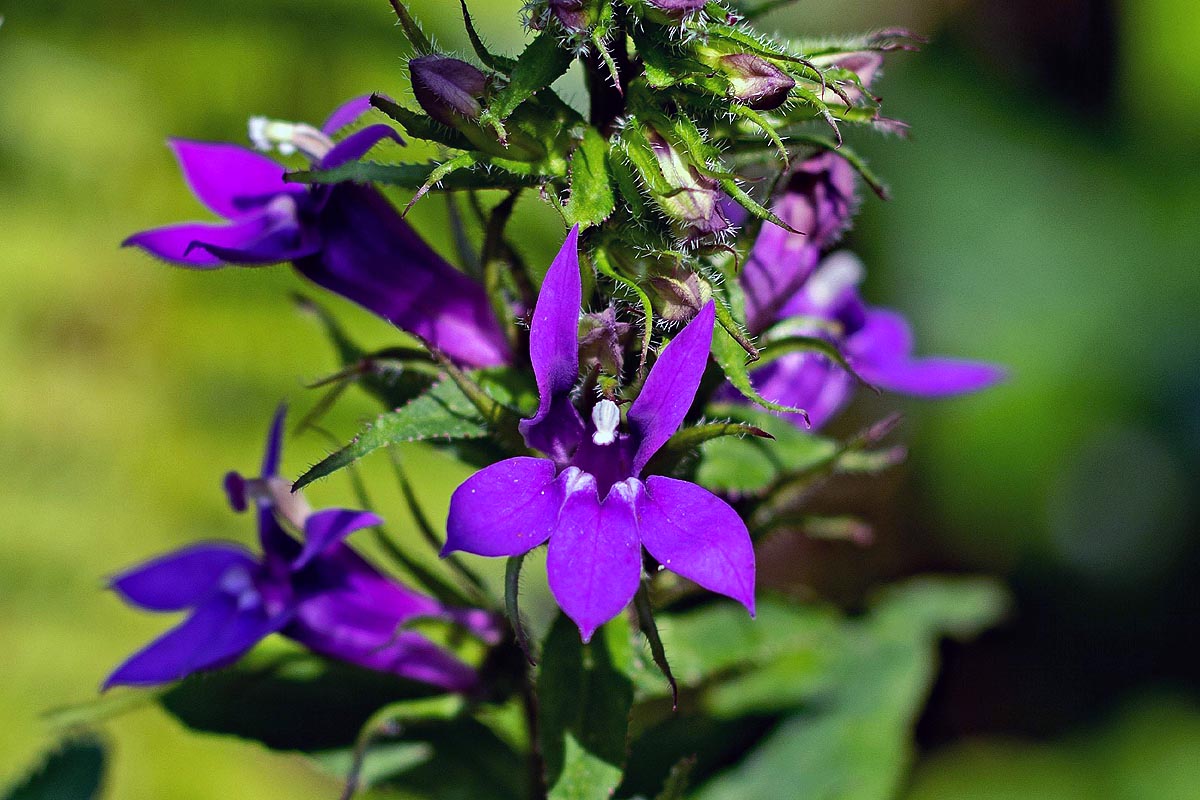
Tall Native American perennial that is ideal for wet boggy areas, beside streams or ponds and rain gardens that get sufficient moisture. Hardy from zone 4-9, possibly 3 with shelter this Lobelia can grow to 5 feet (1.5m) in full sun and bloom for several months starting in later summer. The bright blue flowers provide a dramatic statement in any garden or natural setting. While a short lived perennial it will self seed just around itself so it appears to stay forever. Does not spread and take over the area. Easy to grow but needs a little care to begin with as seedling are very small and delicate. Almost no maintenance once established except cutting down stalks at the end of the year, but even that is discretionary.
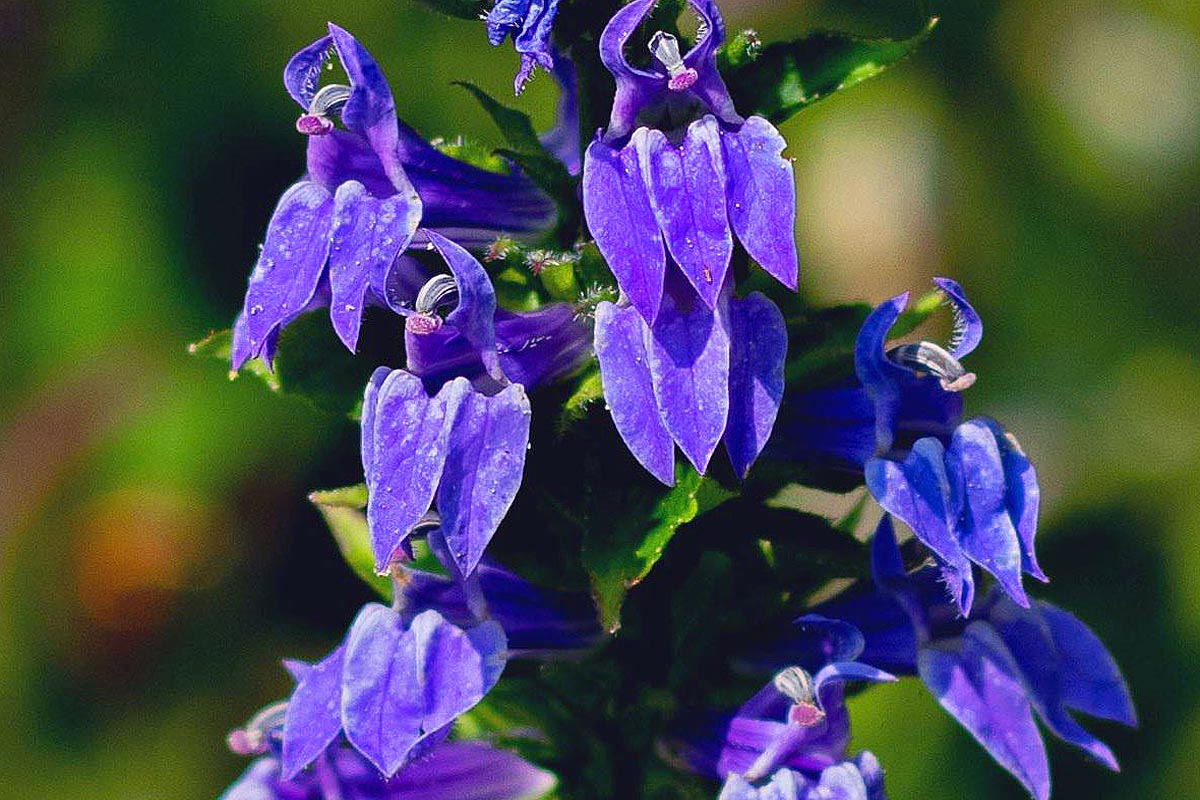
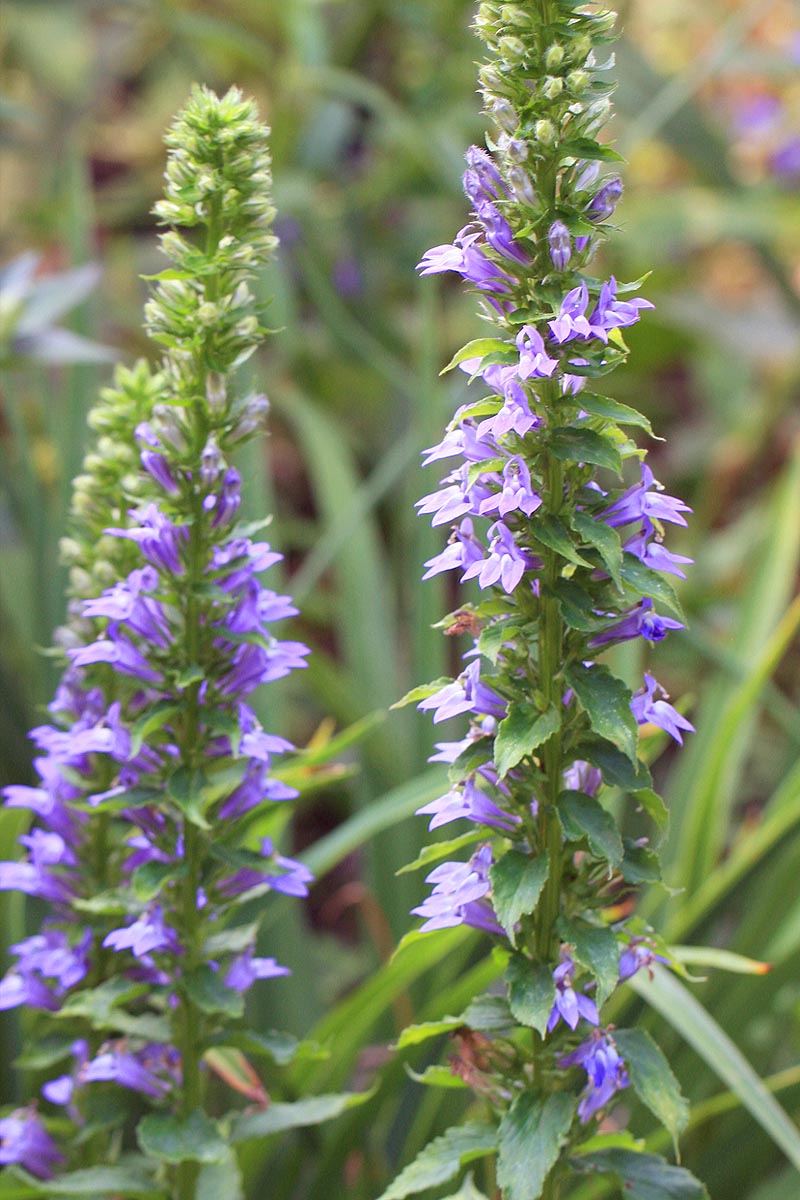
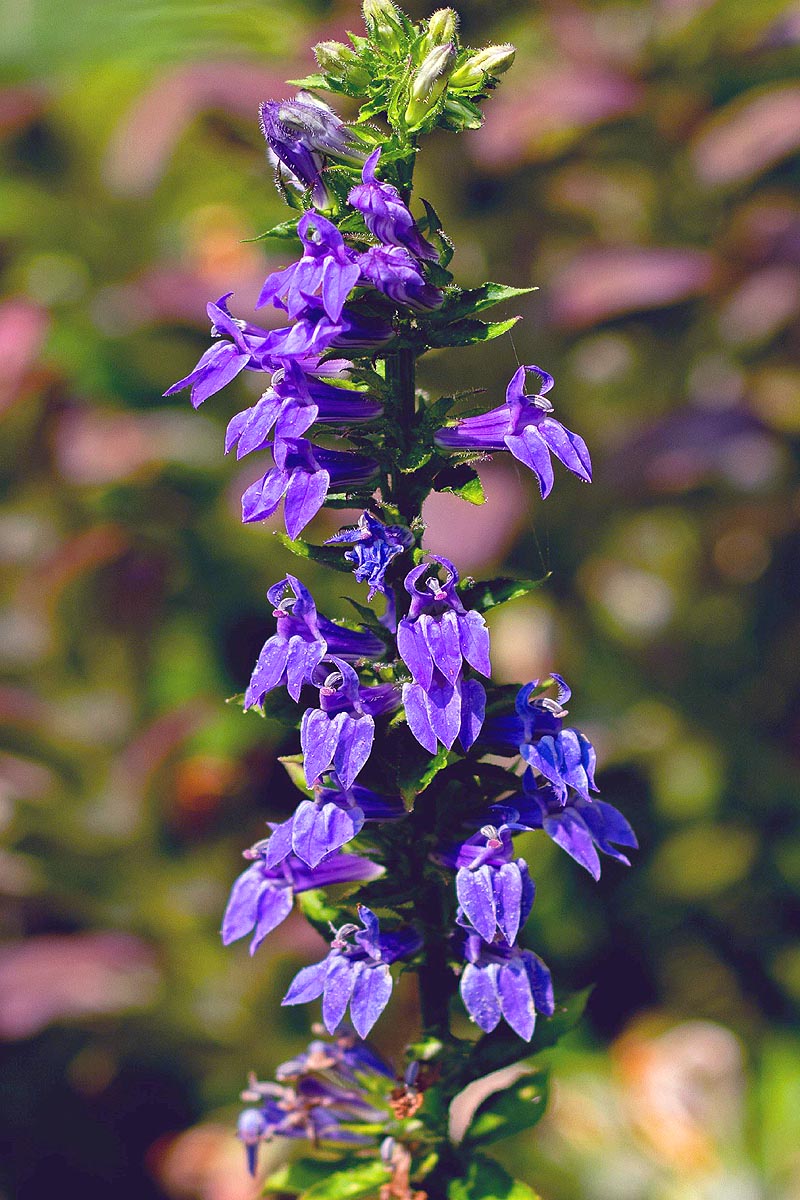
Beginning in late summer the flowers appear on the upper portions of each stalk which can be 12-14 inches (30-35cm) long. Flowers are arranged around the stalk and begin blooming at the base moving towards the top where they are more densely packed. Each flower is about one inch (2.5cm) long with a short stalk tubular in shape with 3 pointed lobes below and two smaller ones above. the corolla tube is split open on the upper side, and the five stamens are fused into a central column that protrudes, a characteristic feature of lobelias. The flowers range in color from light blue to bright blue violet with the lower lobes often have white markings or stripes at the throat. blooming can last for several months lasting into late autumn/fall. Flowers are followed by two celled ovoid capsules about 0.5 inches (1cm) long. When dry these open to release the numerous tiny brown seeds.
Seeds need light to germinate do not cover.
Use fine sterile seeding mix and keep moist, place in well lit area that is relatively cool. In nature this plant begins to grow in springtime so do not overheat. Suggest between 64-67 F (17-19C) for best results. Germination can take 1-3 weeks longer if temperatures are below optimum or light levels are too low.
Seedlings are very small and delicate they need good care to reach a at least 1-2 inches (2.5-5cm) before transplanting to larger pots and growing on.
While several sources state that seeds require moist stratification we have not found this necessary. keeping seeds cold seems to be sufficient. All our seeds are kept in cold conditions before they are shipped to you. We recommend keeping seeds in the refridgerator until you are ready to plant.
Light. Prefers full sun for best results where it will grow tall and flower profusely. It will tolerate some shade during the day and even grow in partial shade it may not flower as profusely and may become more lanky rather than stout.
Soil. Ideal soil is rich loam that is slightly acidic to neutral but it will tolerate almost any soil type provided it is given enough moisture. Does not like to dry out and is not drought tolerant.
If soil has a tendency to dry out a thickish layer of mulch around plants to help retain moisture is suggested. However if self seeding is desirable take care not to cover any new plants that may germinate.
Spacing and growth. While GB Lobelia is a short lived perennial it will generally self seed in good conditions. Seeding tends to be sparse but enough to keep the patch going year after year and increasing very slowly in size. For this reason its is suggested planting initial plants abut 1-2 feet (30-61cm) apart to allow space for new plants to grow. It does not self seed across the garden and tends to stay where it is planted.
Today its uncommon in herbal use but may be gaining more attention as some herbalists strive to find new plants to use. Today it is sometimes used to treat respiratory conditions as a bronchodilator, expectorant, and respiratory stimulant especially for asthma but only in very low dosages. More commonly Lobelia inflata known as Indian tobacco is most commonly used as it is better tolerated and has higher levels of lobeline. It does exhibit anti-inflammatory actions and has shown some potential in cancer treatments but this is in preliminary stages at present.