



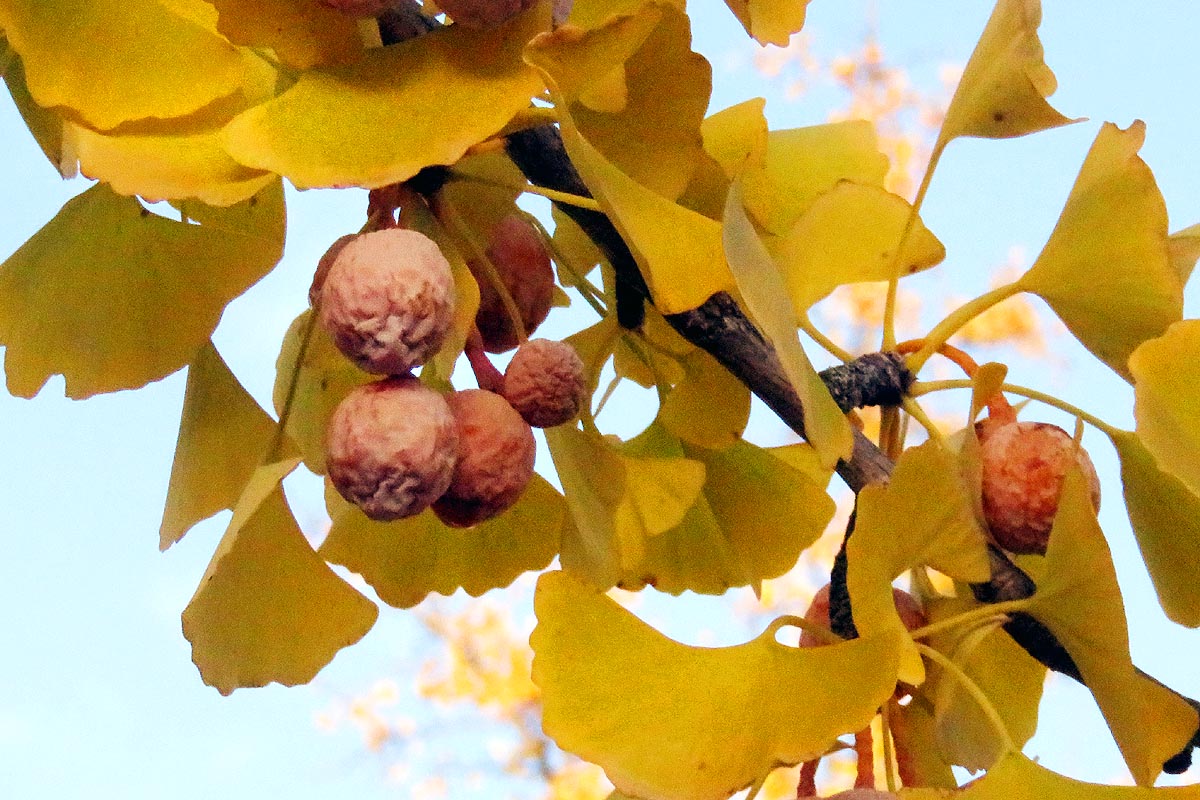
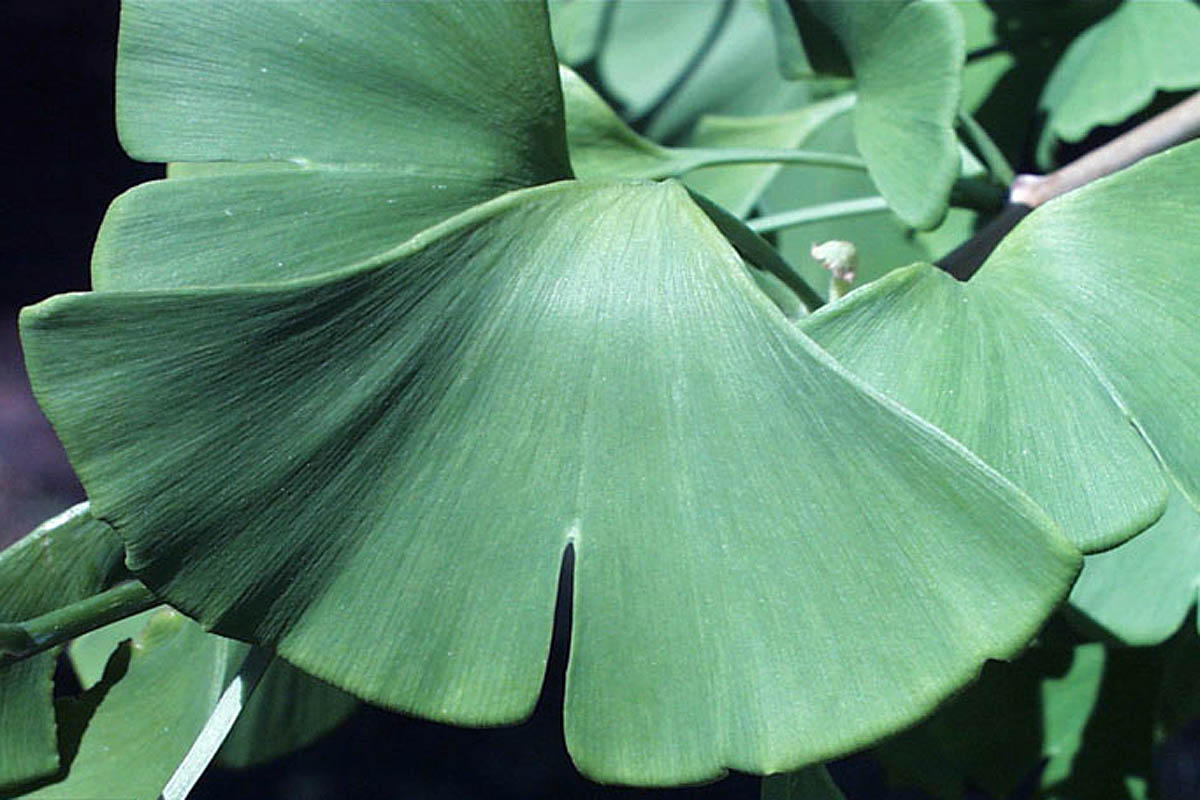
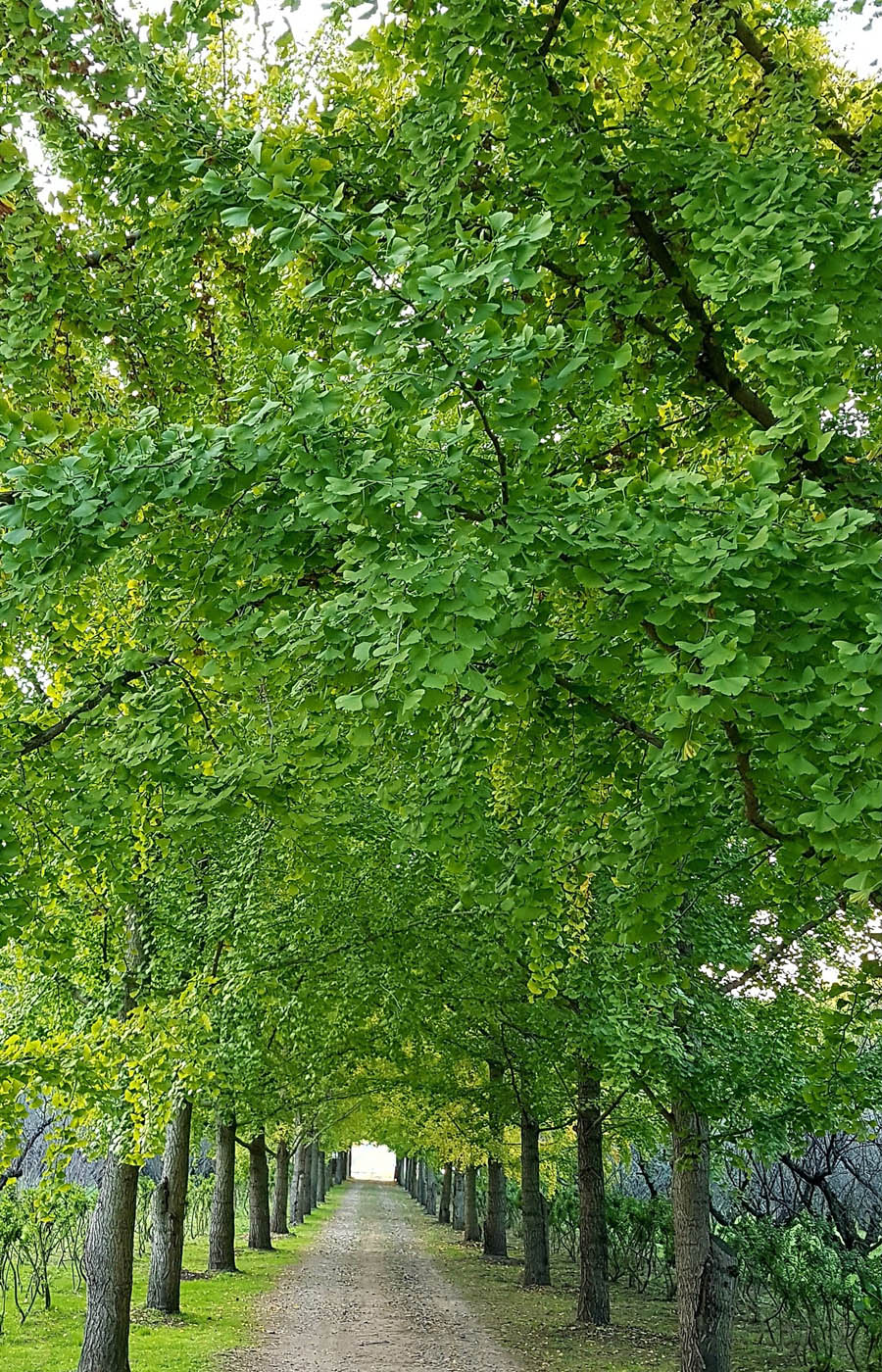
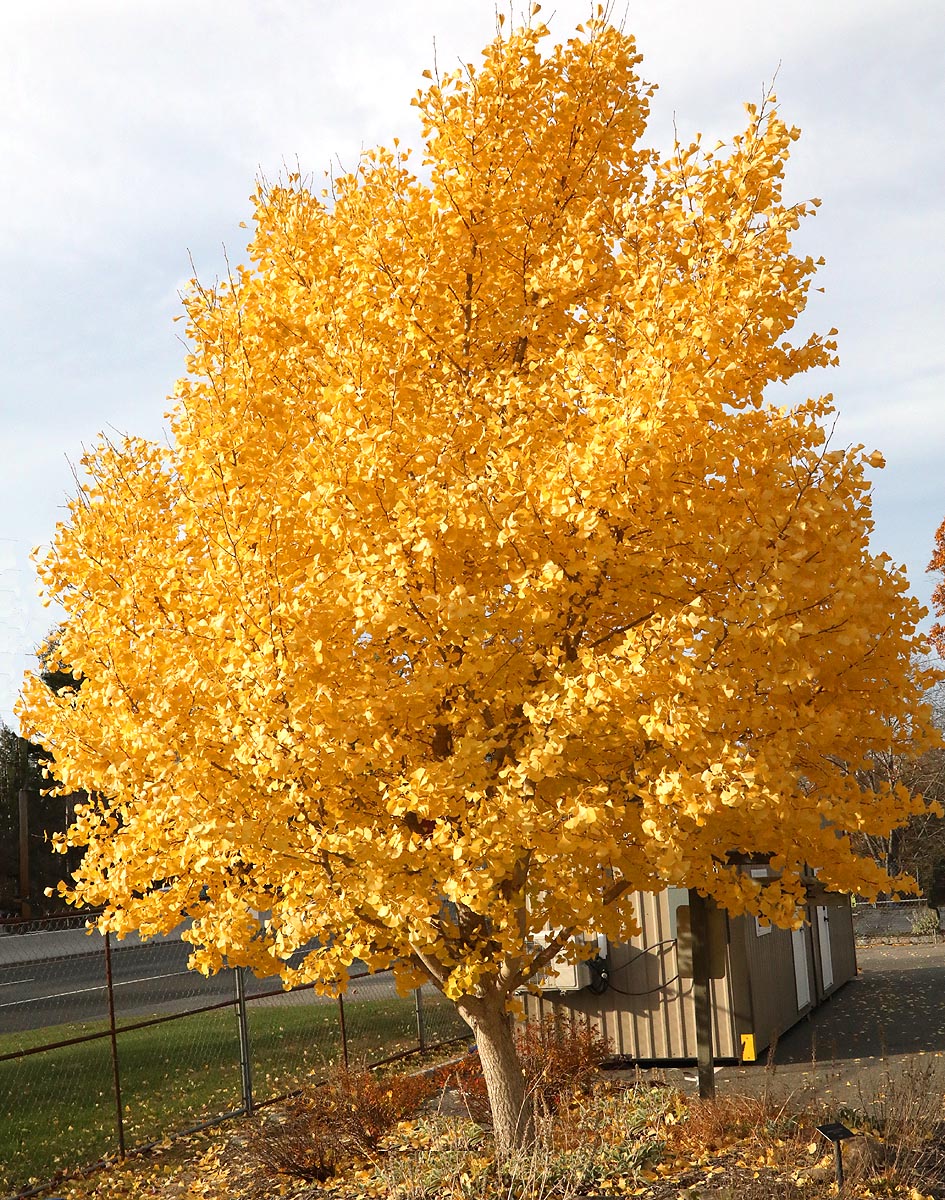
A truly unique tree, its actually a living fossil having remained the same for millions of years. It has very distinctive fan shaped leaves that are lush green but turn a shimmering golden yellow in autumn/fall. Often leaves will drop in short period of time providing a stunning golden carpet. These trees are extremely hardy growing from zone 3 down to 9. Its very resistant to pests and diseases and will tolerate salt so its idea for shore communities and as a street tree where salt is used in winter. Its tolerance of compacted soils when mature also makes it an ideal street tree. It will also tolerate air pollution such as smog and soot so its perfect for large industrial cities. Ginkgo trees can live for hundreds of years and even though during that time they can grow very tall they have deep root systems and are rarely uprooted or toppled under any weather conditions. Due to their deep roots they don't crack sidewalks or other paved surfaces. These majestic trees considered bearers of hope as they are the only trees to survive nuclear bombing. They are revered in Japan and planted in many areas. Female trees do produce fruits that many consider fowl smelling but others consider a blessing as the seeds (called 'nuts' even though they are not botanically nuts) a great delight as they are edible and delicious and used in many Asian dishes. It is impossible to tell male and female trees apart until the fruit which is generally not until the trees are at least 20 years old.
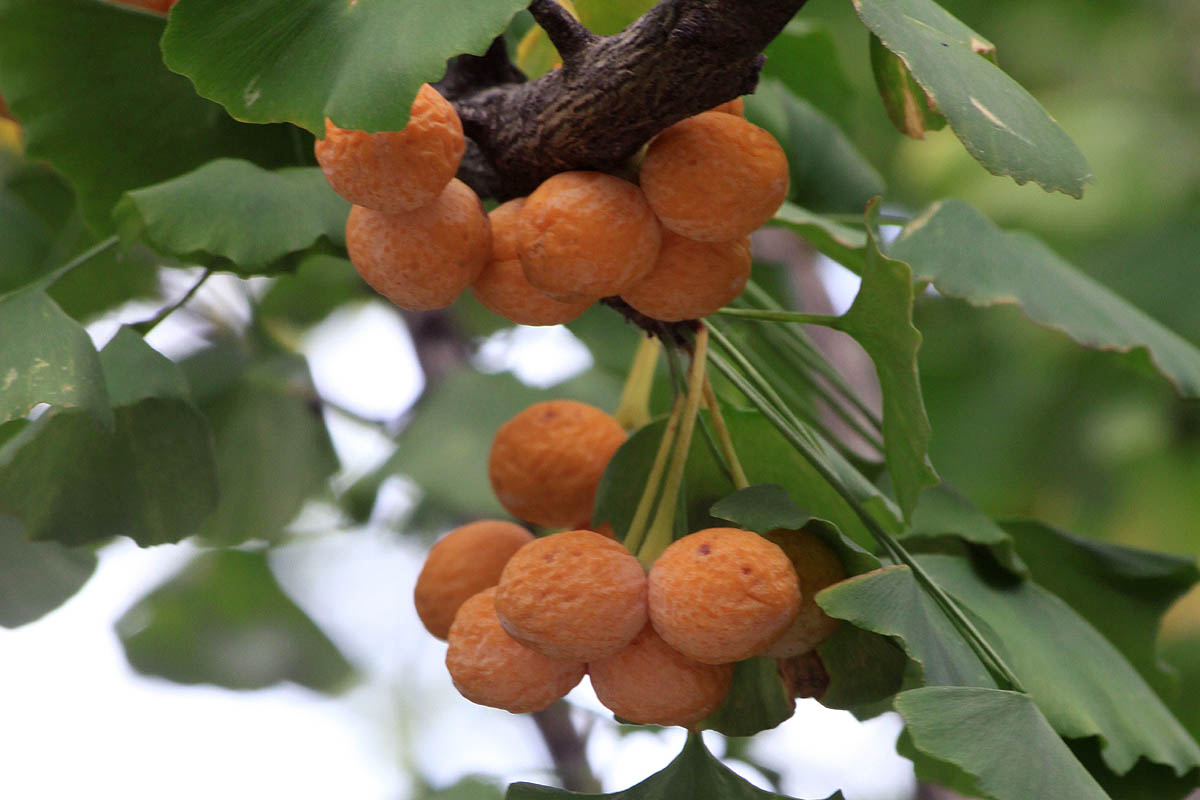
Ginkgo trees are dioecious, meaning they have separate sexes - male trees produce small pollen cones, while female trees bear ovules that develop into seeds. The "fruit" of ginkgo is technically a seed with a fleshy outer layer. It is circular in shape about 1-2 inches (2-3 cm) in diameter with a long stalk that hang from the branches in clusters like cherries. They are golden or yellow-orange when ripe and can produce an unpleasant odor like rancid butter. However inside the fleshy coat is a large hard nut-like shell protecting the edible inner seed which are much sought after in some cuisines. However female trees can be seen as messy and smelly and for the most part male trees are grown in ornamental settings. However trees grown from seeds take a considerable time to reach enough maturity to fruit, depending on the location this can be anywhere from 20- 35 years. So you can enjoy the tree for a long while before it may cause smells.
In all cases the seeds MUST be kept moist. To ensure this happens we ship your seeds direct from our moist storage in a plastic Ziploc bag along with fungicide soaked moisture holder.
It is essential that as soon as your seeds arrive they are removed from the plastic bag and placed in the refridgerator in a damp environment. If left in the bag they will go moldy despite our efforts. Seeds that dry our are prone to dying quite quickly.
Seed germinate best after a period of cold moist stratification. Refer to our stratification instructions to chose the method that best suits your needs. A copy of this an instructions on how to take care of your seeds will accompany all orders.
Seeds need a period of warm moisture then 45-56 days or cold moist stratification before they will germinate well. If they have longer than this amount of time they still germinate well, but less time does inhibit growth.
We start all our seeds in cold stratification after the period of warmth so depending on when you purchase your seeds will determine if you need to complete this process or not. All our seeds will come with a date stamp of when the process began so all you need to do is a small amount of math.
1. Take the date that is written on your packet,
2. Count how many days from there until the day your seeds were shipped NOT the day you received them. That is how much stratification has been already completed.
3. Subtract this number from 56. This is how many more days it needs to be stratified BEFORE the shipping disruption.
4. Add 5 days for time in shipment, more if it took a long time to reach you. This is the total time needed for stratification of the seed for best results.
We like to use 2 1/2 inch (6cm) pots to start our Ginkgos as it give them plenty of room to grow and the seeds are quite large. It also means that they can grow to about 6-8 inches (15-21cm) in height before they need to be transplanted into larger pots.
Seedlings can be transplanted to their final outdoor positions once the little trees reach 8 inches (21cm) high. Ensure they are well protected from wildlife and lawn mowers. Placing a tree tube around a small tree helps protect if from wildlife in many ways. When very small animals may eat them, when larger male deer can rub their antlers against them and kill the small tree. Lawn mowers can hit the base and scar or even kill a tree.
1. Mark well where you planted the seed. Its easy to forget and pull it up by accident when it does germinate.
2. Protect from all kinds of wildlife. Gingko nuts are very nutritional so wildlife will just love to dig them up and eat them. The majority of 'failed' outdoor germinations are due to predation of seeds by wildlife.
Light. This is a full sun tree, they do not tolerate shade well and become lackluster.
Soil. Needs a well draining soil, does not to well in wet soils and this will rot the roots. Its not fussy about pH but prefers a middle range from about 5-8. Prefers and sandy loam mix with some good organic material for best results.
Water. Young trees need to be watered on a regular basis, about once a week if rainfall is not plentiful and more if there is a drought. Once established the matures trees are fairly drought tolerant and are often used as street trees
Once established or transplanted as larger trees Ginkgo's are very tolerant of compacted soils and low water requirements so they are often used in urban areas as street trees as they also tolerate salt spray and urban pollution well.
Spacing. Ginkgos can grow to 65-100 feet (20-35 m) and often about half as wide so they need a lot of space. Allow enough room to accommodate the trunk and the canopy with the spreading roots system. So allow at least 30-40 feet between trees. Crowding can cause trees to stunt and look ugly.
In Eastern countries the nuts and the pulp are also used in the treatment of pulmonary tuberculosis, asthma and bronchitis. The cooked seeds are also used to treat asthma, coughs and urinary incontinence.