




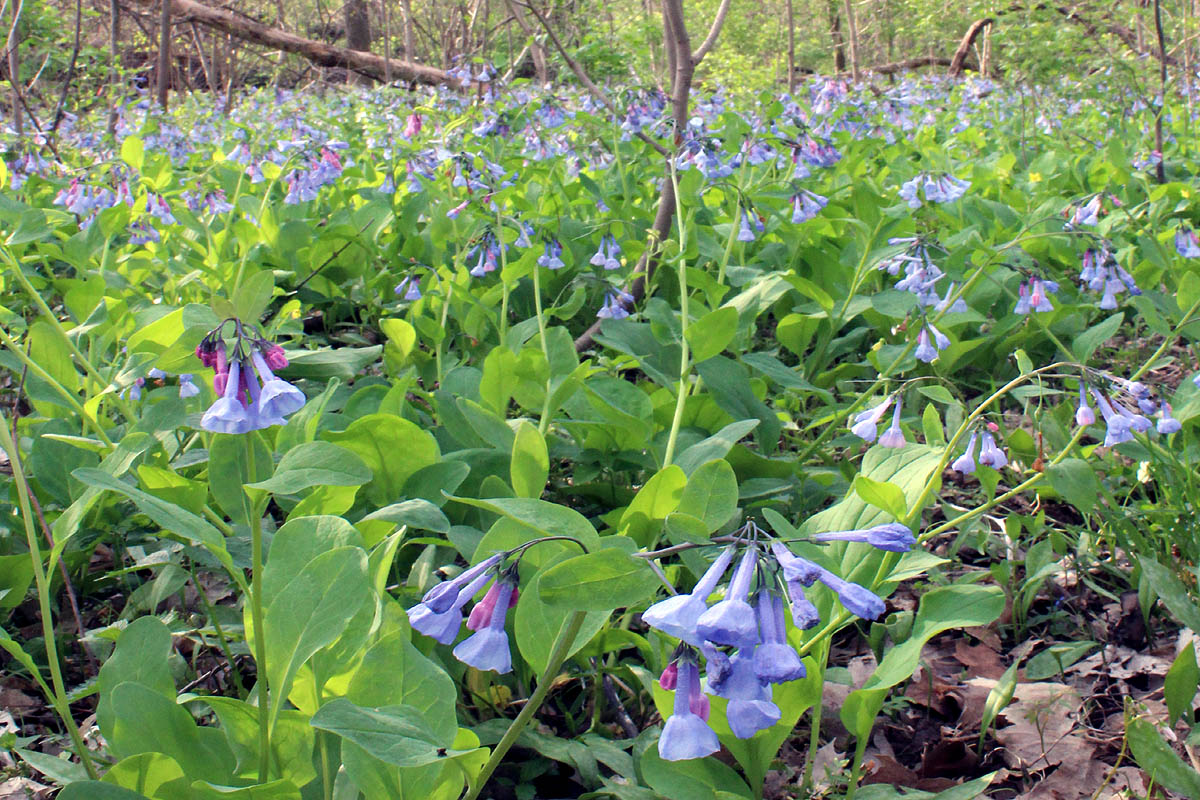
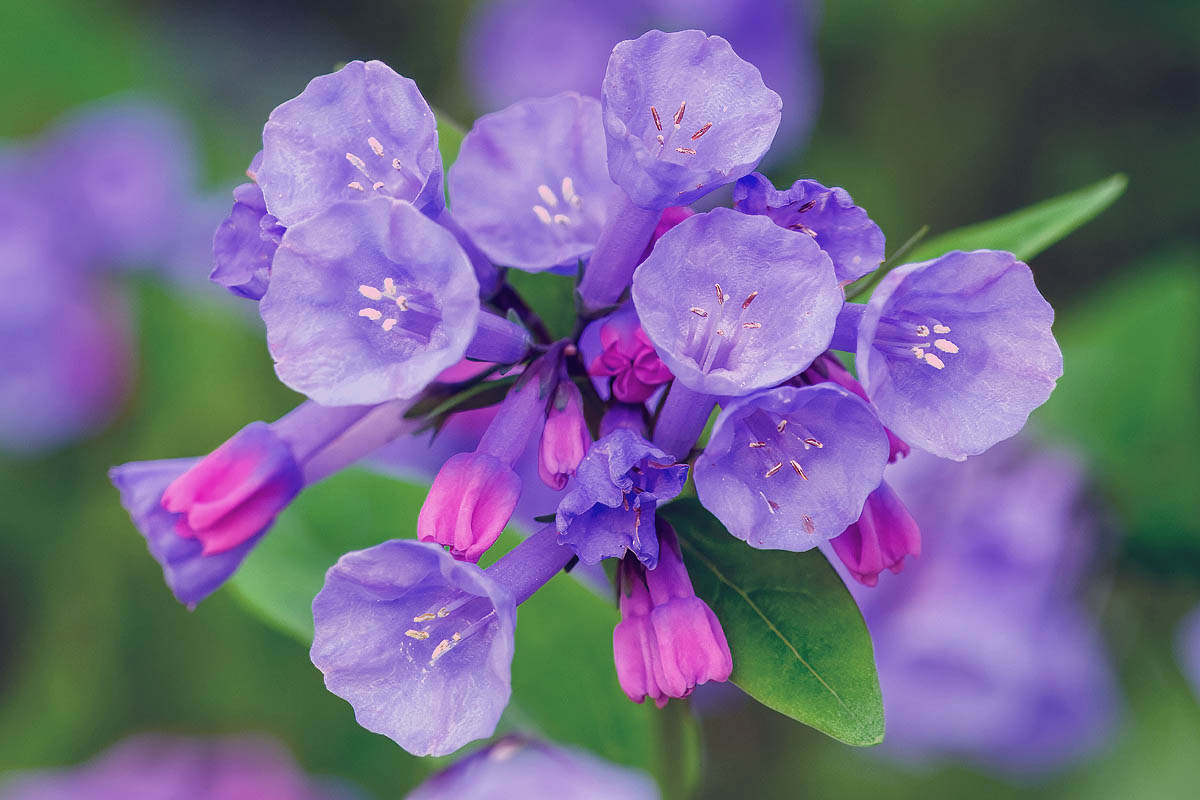
The perfect Native American flower for deciduous woodlands. Arising in early spring before the leaves are on the trees it takes advantage of the light on the forest floor to produce cascades of lovely blue flowers. Flowering for 2-3 weeks it then fades away as the trees leaf out and is gone by summer, snug under the coating of downed leaves waiting for next spring. This lovely flower is unusual in that it will grow under black walnut trees which is ideal as its gone before the walnuts fall and are harvested. It is also not eaten by virtually anything due to its salty flavour and mucilaginous texture even snails don't eat it. The leaves are edible and are reported to have a slightly oyster like taste. Does need moist stratification before the seeds will germinate but once established this plant takes no maintenance and will slowly self seed across the forest provided the soil is moist and rich enough. Ideal for those with woodland that need some color in the springtime. Hardy from zone 3-9.
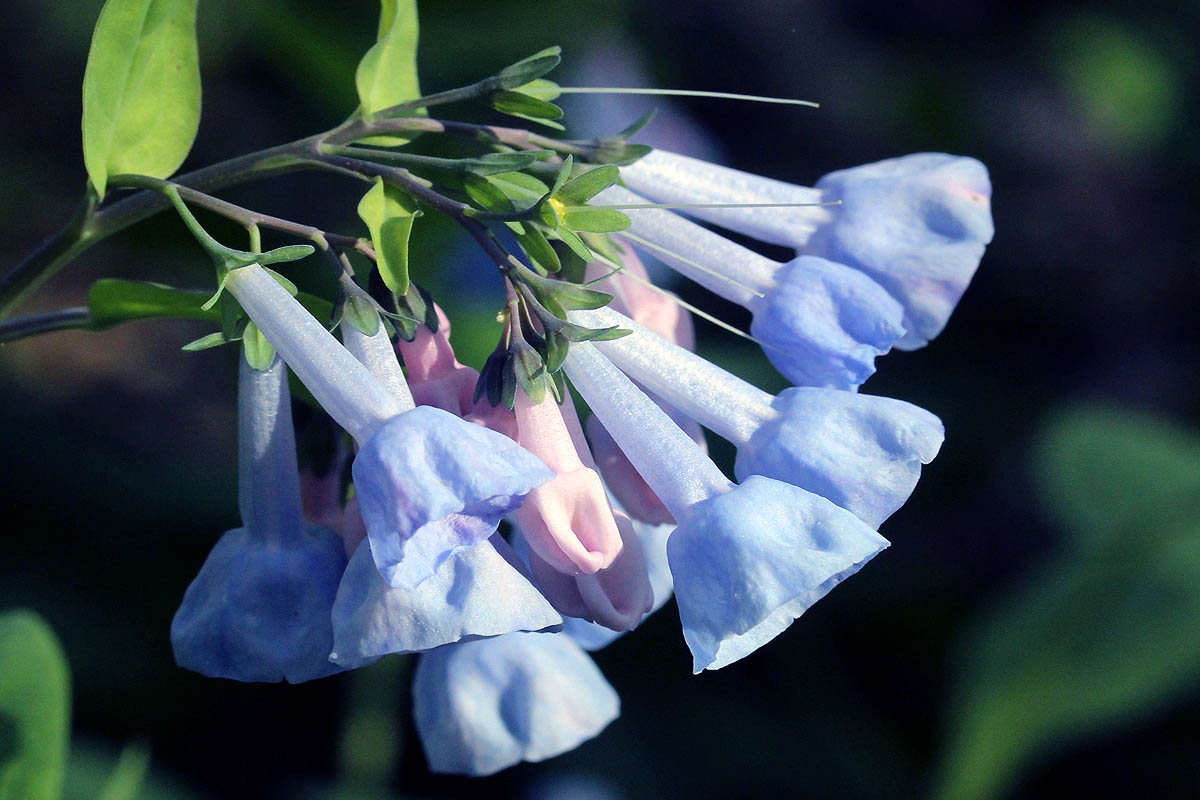
Flowers arise in early spring the buds are pink and then mature to a light blue. Flowers are produced in clusters and are trumpet shaped formed from five fused petals with 5 white stamens. Each flower is about 1 inch (2.5cm) long with a short thin stalk attached to the branching stems at the top of each shoot flower clusters commonly contain 15-20 flowers but they can be a few as 3-4 depending on location. Flowers persist for 2-3 weeks and are followed in early summer by small nutlet fruits containing four dark brown seeds. By mid summer the foliage has gone and the plant goes dormant until next spring.
Move outside when all frost has past and transplant when about 4-5 inches (10-12cm). Plants usually flower in their second year. They will also self seed and form groups but it takes a considerable while for this to happen.
So the best location for these plants is woodland settings NOT under coniferous trees as these do not offer spring light. They can also be grown under or around shrubs and on north sides of buildings. The do not tolerate full sun at any time. Will grow under Black Walnut trees where most other plants will not.
Soil. They really like rich soil full of humus that which is produced by leaf mulch, so if you have trees do not rake the leaves in the winter but leave them as food for these lovely plants in spring. They will grow up through the leaves and feed on them as they decompose. If there is not sufficient it will need to be added before the plants are installed. They are not really fussy about the underlying soil type provided it is well drained they do not like wet soils. they grow well on rich forest floors that will occasionally be flooded for short periods but will also grow on slopes and any shaded area provided there is enough humus. Ensuring the area is covered with leaves, and other forest debris during the summer keeps the moisture in and sustains the roots.
Water: Moist soil during the growing season is essential. In most cases this occurs naturally from winter snow and rain but in warmer zones extra watering may be required. Ensuring that the soil in the area is always covered with leaves or mulch keeps the moisture in and the plants protected.
Spacing. Crowding causes too much competition and can cause decline so ensure plants are at least 18 inches (46cm) apart. If plants self seed too closely move plants when they arise or mark spots and move in late fall.
Once established these plants need little care apart from ensuring the soil is covered to keep in moisture and protect roots from the elements. They are perfect from woodlands providing beautiful spring color before trees leaf. While some suggest pair with daffodils these plants can exude a chemical to prevent other plants from growing near them so it is not recommended.
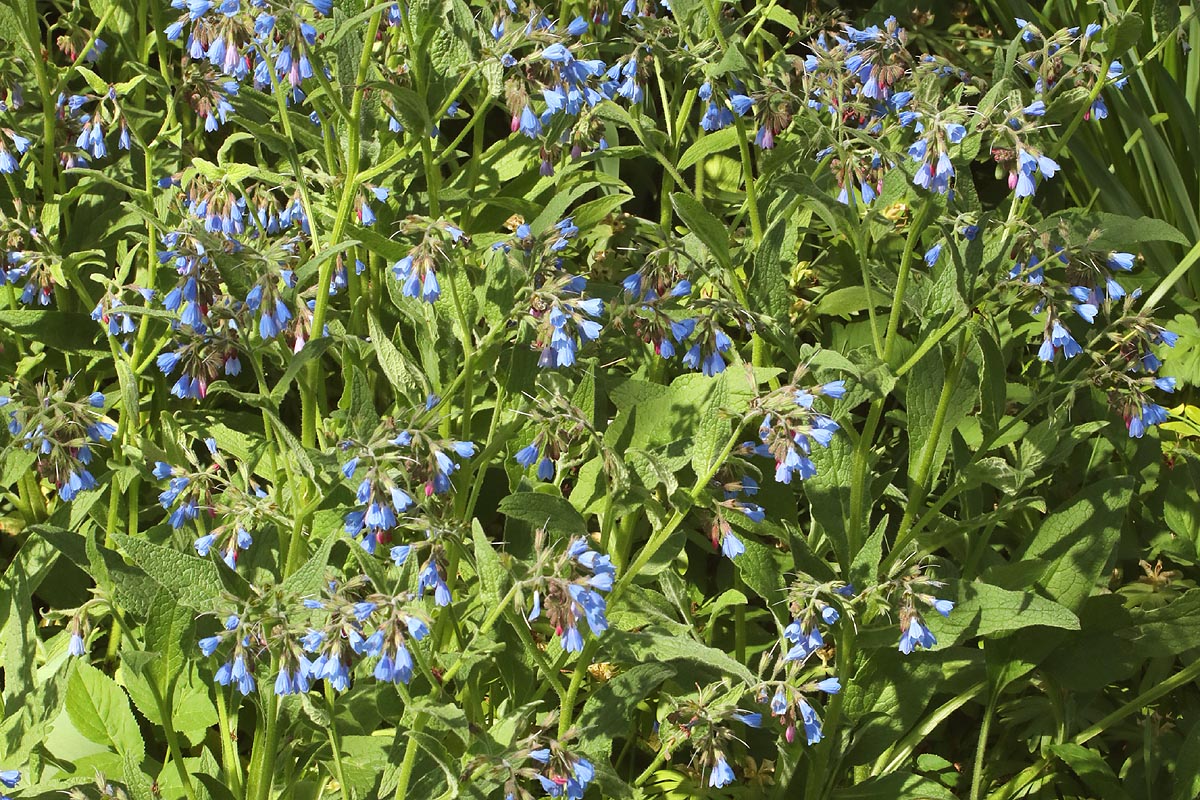
NOTE. Do not confuse Virginia Bluebells with European bluebells (Hyacinthoides). European bluebells are toxic and should not be eaten.