



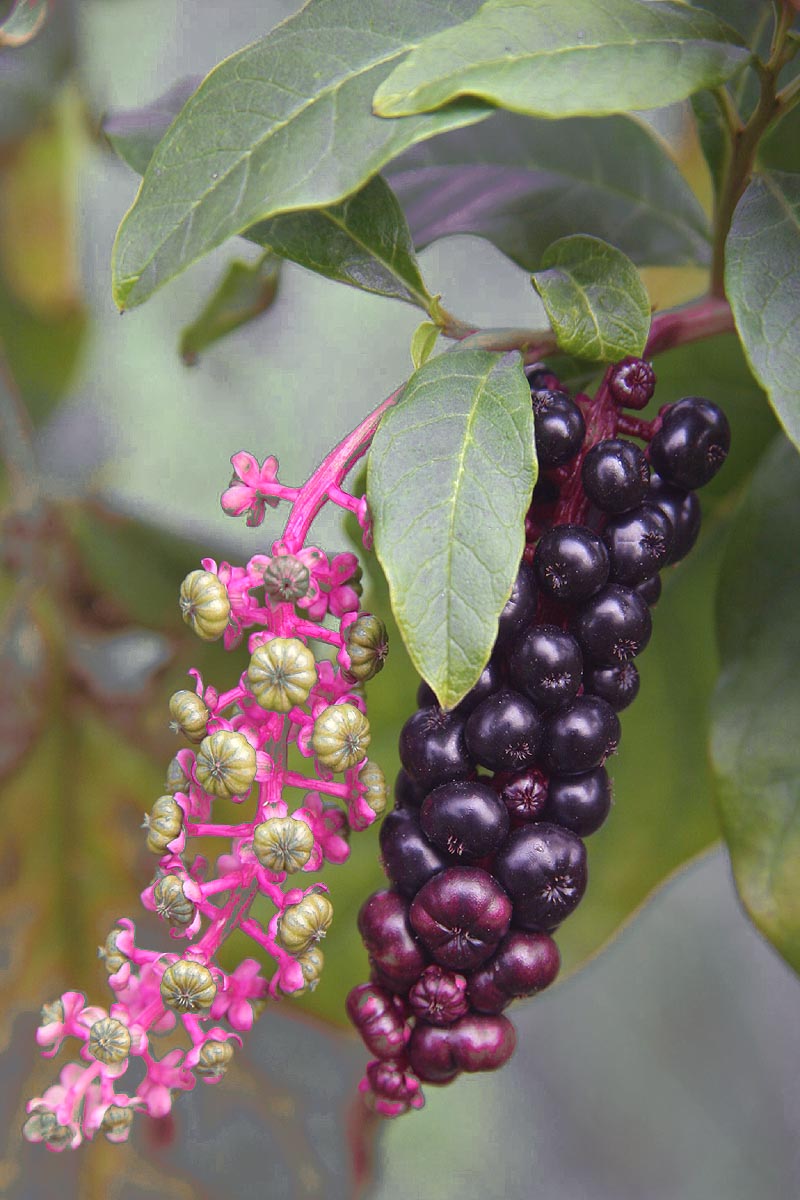
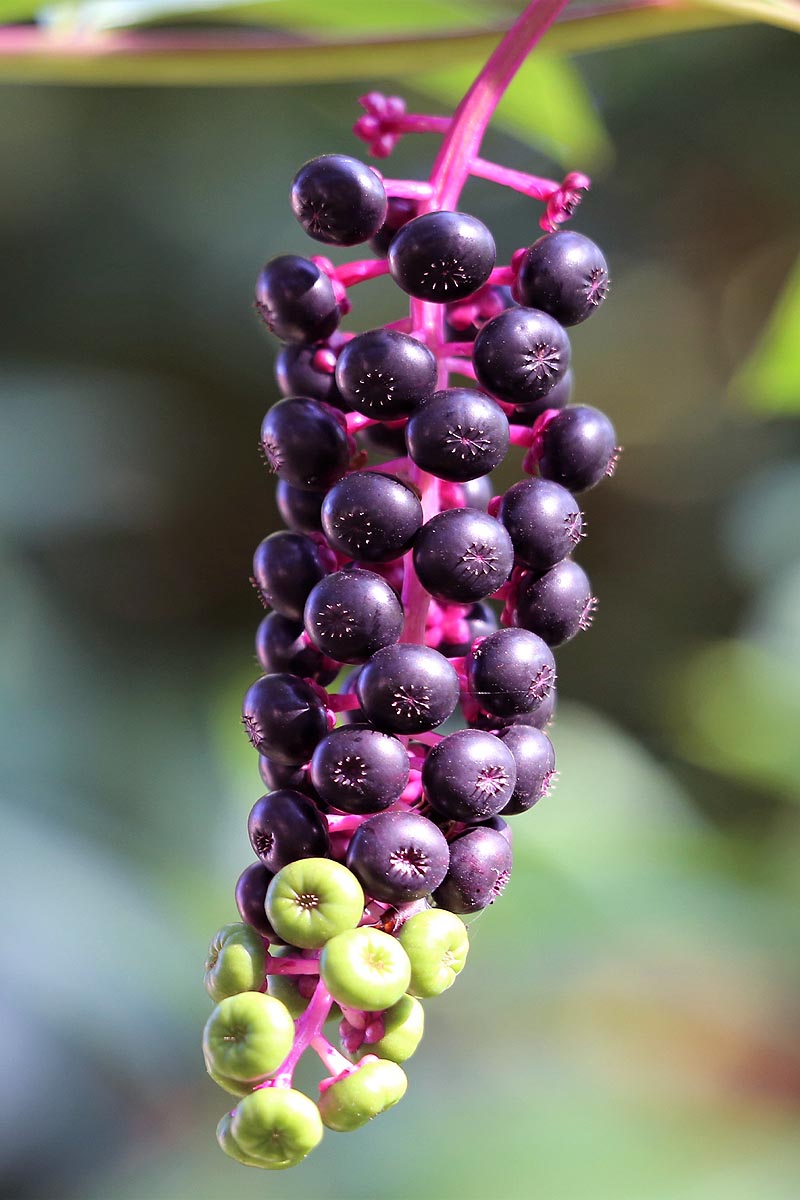
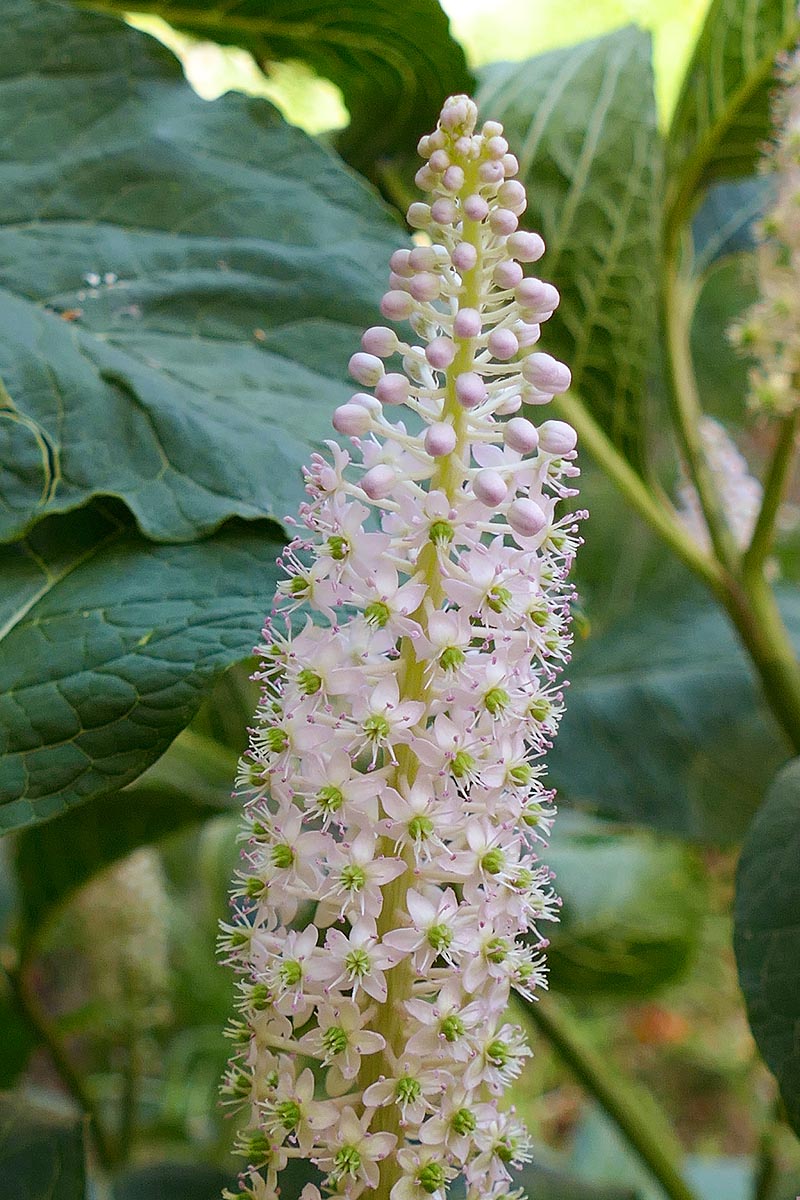
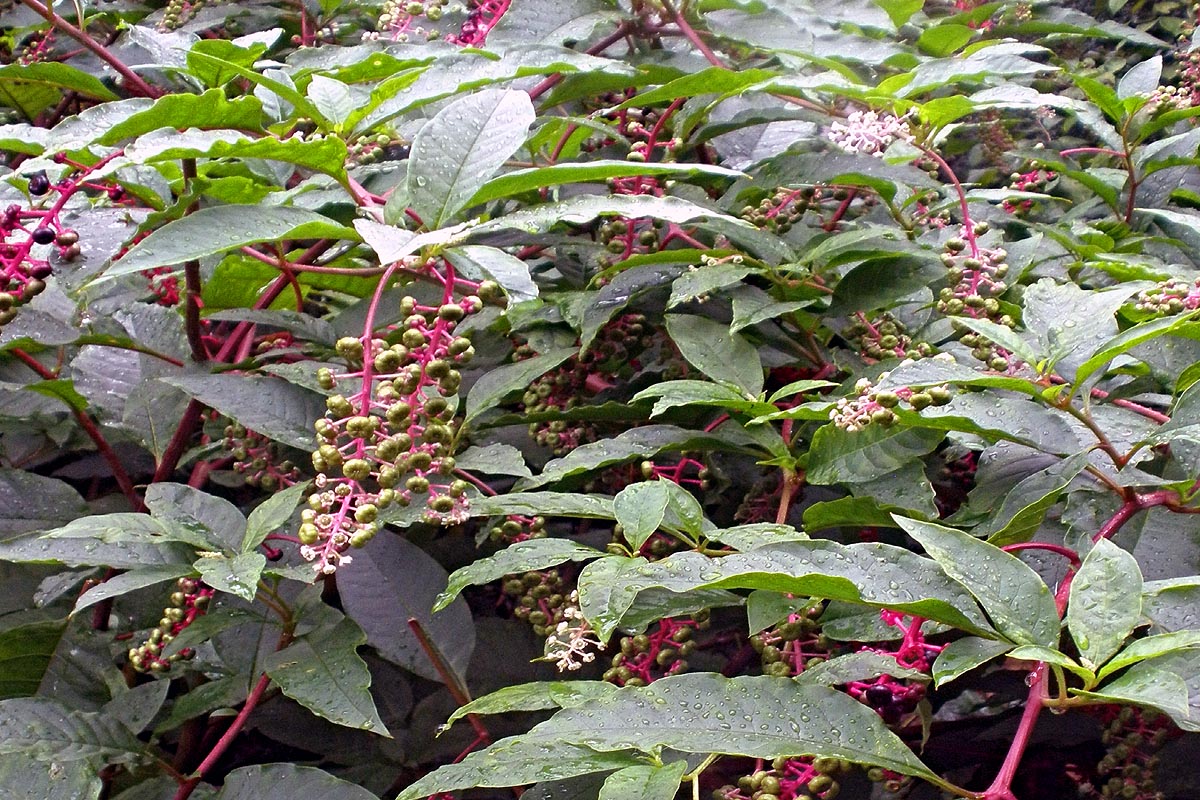
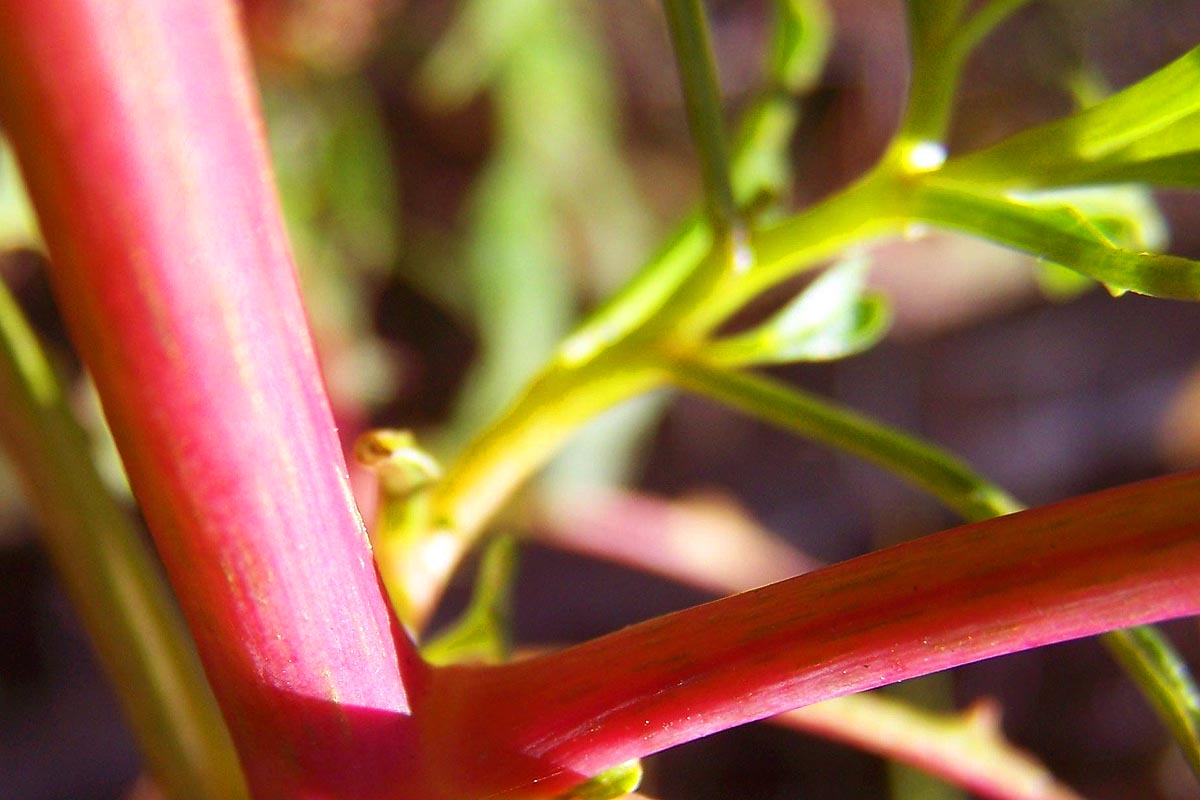
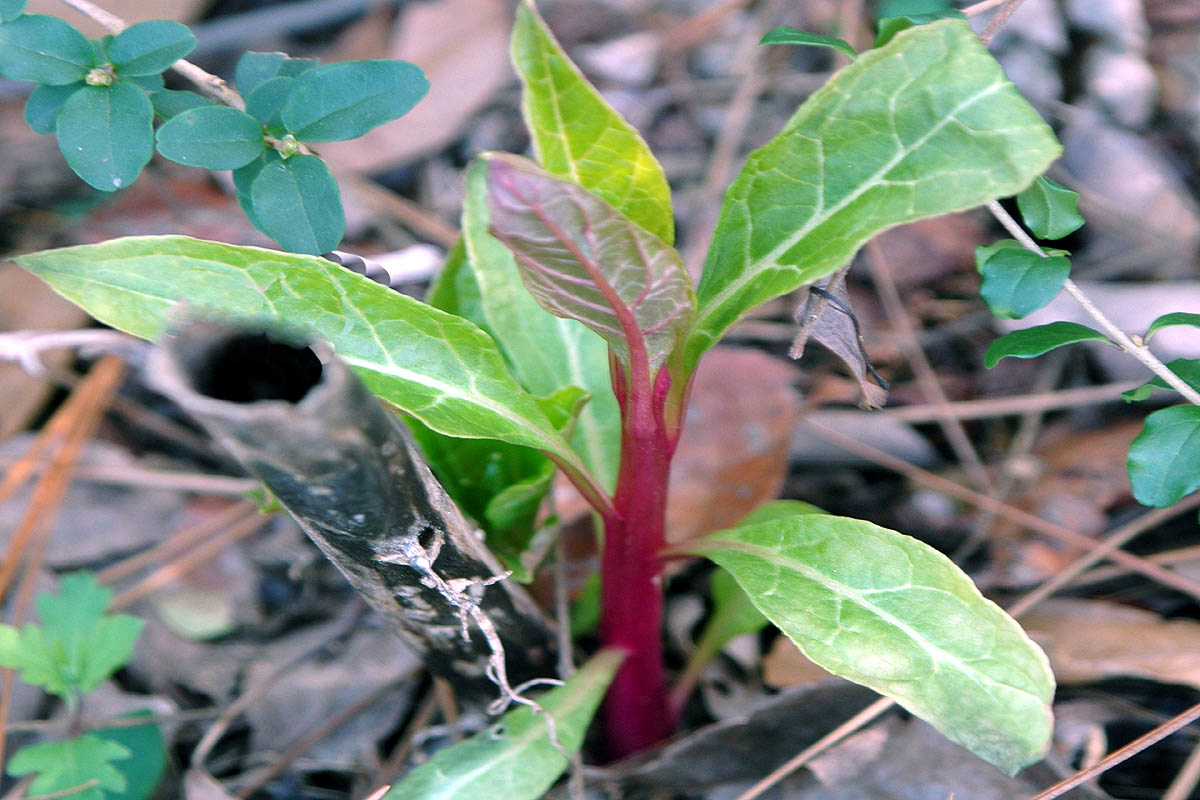
A tough hardy Native American perennial that is often grown as a ornamental due to the striking bright red color of its stalks along with long cylindrical groupings of white flowers followed by striking deep purple berries. Growing as tall as 10 feet (3m) with multiple stems and branches these plants can become very large and showy. Hardy to zone 4 (3 in sheltered locations) down to zone 9. The birds adore the berries and pollinators especially butterflies love the flowers. Produces a deep fleshy root that will sustain it through drought and ensure it returns year after year growing large with each season. However it is a very toxic plant. Every part of the plant is toxic from the leaves to the roots. While the berry flesh is not the seeds inside are very toxic so beat all is avoided. It is used medicinally by some highly trained herbal practitioners but only in very low dosages. It is recommended that gloves and long sleeves be worn when dealing with this plant.
Despite its known toxicity Native Americans and rural communities often consume the young leaves and shoots in springtime. These need to be carefully prepared and eaten in small quantities but it is considered a delicacy. So while some consider this a hazard others love the showy plant and it has been exported around the world for use as an ornamental. once established it thrives in most conditions except wet soils and returns year after year with a very long lifespan. Needs almost no care or maintenance except removing dead stalks each winter ready for another show in springtime.
Pokeweeds produce large thick tubers. First year tubers can be 18 inches (46cm) long and only slightly branched, looking more like large carrots. Older plants can have enormous tubers with much branched roots and can weigh in excess of 15-20 pounds (7-9 kg). Some plants when damaged are reported to produce a rank bitter odor but not all of them do.
While some sources suggest you feed the seeds to chickens then collect the 'fertilizer' and stratify from there, this is somewhat impractical and messy for most gardeners.
We recommend using the sandpaper method to scarify the seeds. Process only a few seeds at a time to ensure they all get good treatment. After this seeds should be soaked in water for about 24 hours to encourage them to take in water and swell.
Moist stratification. While many sources suggest seeds need at least 3 months of cold stratification this is not really necessary with our seeds. We store all our seeds in cold temperatures so they have experience quite a bit of winter. However we have not moist stratified them as we don't like to scarify seeds before shipping. But it does mean that the period of moist stratification after soaking seeds is reduce to 20-30 days rather than 90-100. Refer to our Stratification Instructions to determine the best method for you.
Direct sowing. Can be done in late fall/autumn or early winter before the ground has frozen and leave nature to do the work for you. This method is easier but runs the risk of seeds being eaten by wildlife.
If you ordered your seeds later than artificial stratification is required.
Sowing Indoors. If you used the egg box method to stratify your seeds just place the box in your seeding area.
sow in small pots or individual cell trays in a good sterile seeding mix about 0.25 inches (6mm) deep. Keep moist and place in a warm location no more than 75F (24C) in bright light. Germination can be slow and erratic depending on how well the scarification was achieved seeds can be slow and rates can vary from 30-80% Some seeds may emerge quickly others may wait 3 months or more others may just be cantankerous and not emerge until next season so don't give up on ungerminated seeds.
If they have not germinated by time winter arrives ensure they are moist then wrap pots or seed tray in a thick transparent plastic bag and leave outside on a table or bench for the winter. Keep an eye on it to ensure the bag goes not get punchered and the soil stays moist. When temperatures rise in spring remove the bag and place in sunlight and keep moist. Be aware that weed seeds may have landed on your pots/trays during the summer months and you may get more than just pokeweed seedlings.
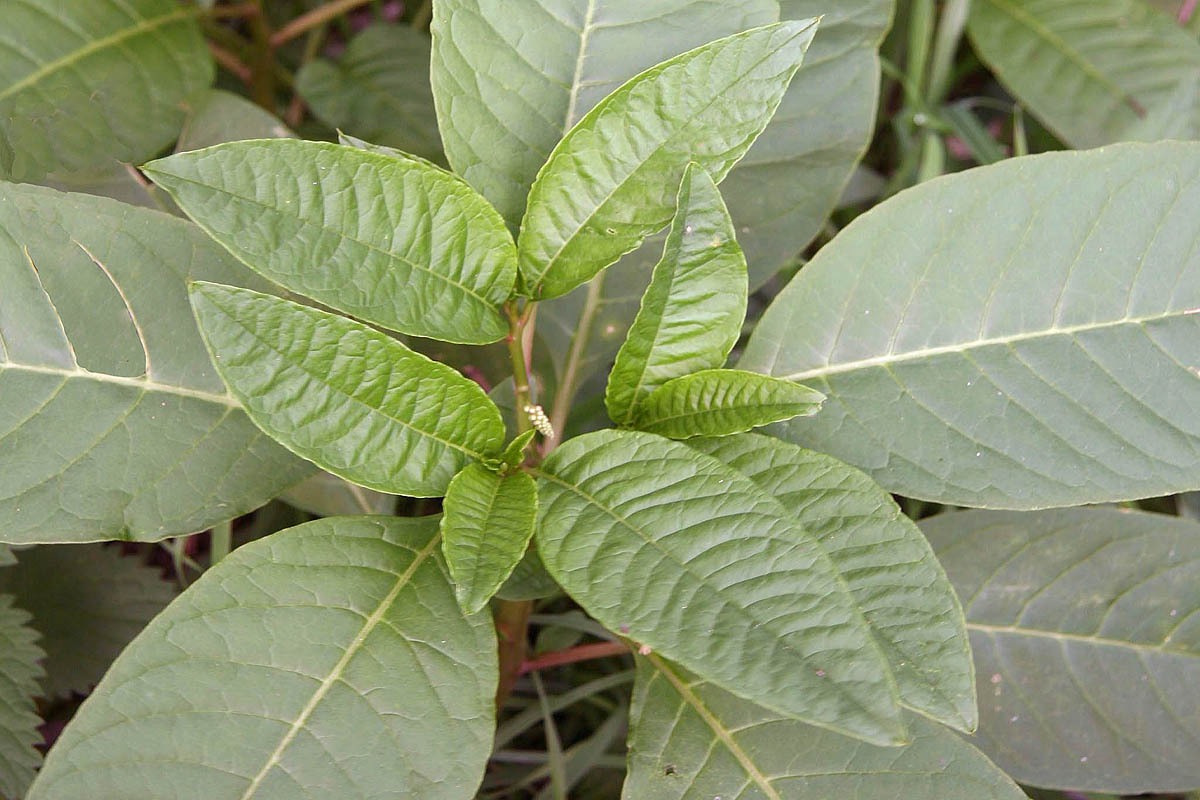
Young pokeweed seedlings have slender red-tinged stems and alternate lanceolate baby leaves.
Light. Fun sun to partial shade. Prefers full sun but is does well at the edges of woodlands. full sun will produce tall thick stems which usually turn red in cooler zones they branch well and can take up considerable space producing many flowers and berries. In semi shade they may be less stout and less red with less branches and flowers. Pokeweed can grow in fairly shaded areas but tend to be much smaller, mostly all green and produce less flowers and berries.
Soil. Not fussy seems to grow almost any soil type but it has to be well drained or the large tubers will rot. However it will tolerate clay soils provided they are not waterlogged. While it seems to prefer moderately rich soils such as woodland edges it will grow on poor soils, tolerate some salt and slightly acidic soils. If cultivating as a ornamental well draining soil with some compost and will provide luxuriant growth producing very large plants often 10 feet (3m) tall and almost as wide.
Water. For best results regular watering in the first year, maybe once a week if there is insufficient rain. Once the tap root has established its fairly drought tolerant. If in a sunny position it may shed lower leaves and wilt during the day but recover in the evening. Once water is restored it will return to normal and continue to grow. If growing as an ornamental watering will depend on size. Smaller plants should have more to encourage them to grow but after several years the roots will be producing a lot of energy for the plant and it will grow very large. restricting water to prevent it getting over large may be required.
Spacing. Will depend on your location and requirements. In semi shaded areas plants will not grow as large or tall so they can be spaced around 3-5 feet (1-1.5m). In sunny locations they can reach 10 feet (3m) across so more space will be needed. Planted further apart does allow the plants to sprawl outwards more. Closer spacing will encourage them to grow up with less branching.
Maintenance. There is really not that much needed. Since it dies back to the ground in winter the dead stems will need to be removed before it sprouts in springtime. Otherwise it will depend on its location and growth. In good soils where it is happy it can grow very large with thick stems that sometimes become too heavy with berries and the stems may bow out and down. Also if plants become tall and there are strong storm winds it may bend over or even break some of the stems. In these cases or if storms are common in your area staking the plants may be advisable. Otherwise it takes little care.
Pokeweeds to produce large numbers of seeds which native birds love to eat. However this means that they can disperse the seeds widely and it could then become invasive in areas where it does not normally grow. Pulling out young pokeweeds before they form thick branched taproots is fairly easy to do especially after rain and is recommended for plants that have volunteered outside the desired area. Once roots have strongly developed plants are impossible to pull out and need to be dug.
While some sources state that nutritionally, prepared poke greens are high in vitamins especially Vitamin C, Vitamin A (as beta-carotene) and Vitamin K. While it is possible the plant material still holds fat soluble vitamins like A and K its unlikely and water soluble Vitamin C would remain after such processing.
Poke berries themselves are not poisonous in small quantizes however the seeds inside are highly toxic. If only one is accidently chewed it can cause serious issues. Prepared properly to carefully remove the seeds without damaging them in any way berry juice can be made into jams or jellies but even then the amount used should be very restricted.
However there are times when professional herbalists do use it. Most commonly for its Immunomodulatory and Antiviral Effects. Research has shown it to be effective against Herpes simplex, influenza, poliovirus, and even HIV-1. It also seems to have compounds that help to stimulate the immune system and be strongly anti-inflammatory and has historically been used by Native Americans and rural communities to treat arthritis, rheumatism, and dysentery. Some herbalists continue to use very low doses of poke tincture as a lymphatic and anti-inflammatory aid for conditions like mastitis, fibrocystic breast, or swollen lymph glands. Research is ongoing into Pokeweeds compounds for possible use in cancer treatments. The plant itself it too toxic to use but it may be possible to synthetically create similar compounds that are not.
It can also be used as an ink and was common practice to use this during the American Civil war. Documents written in the reddish purple ink is still legible today although somewhat faded.
For some people even handling the plant can cause skin irritation with a rash and blistering. The juices of the stem and leaves could possibly enter the bloodstream if the skin has cuts or abrasions. It is strongly recommended that gloves and long sleeves be worn if working with this plant.