




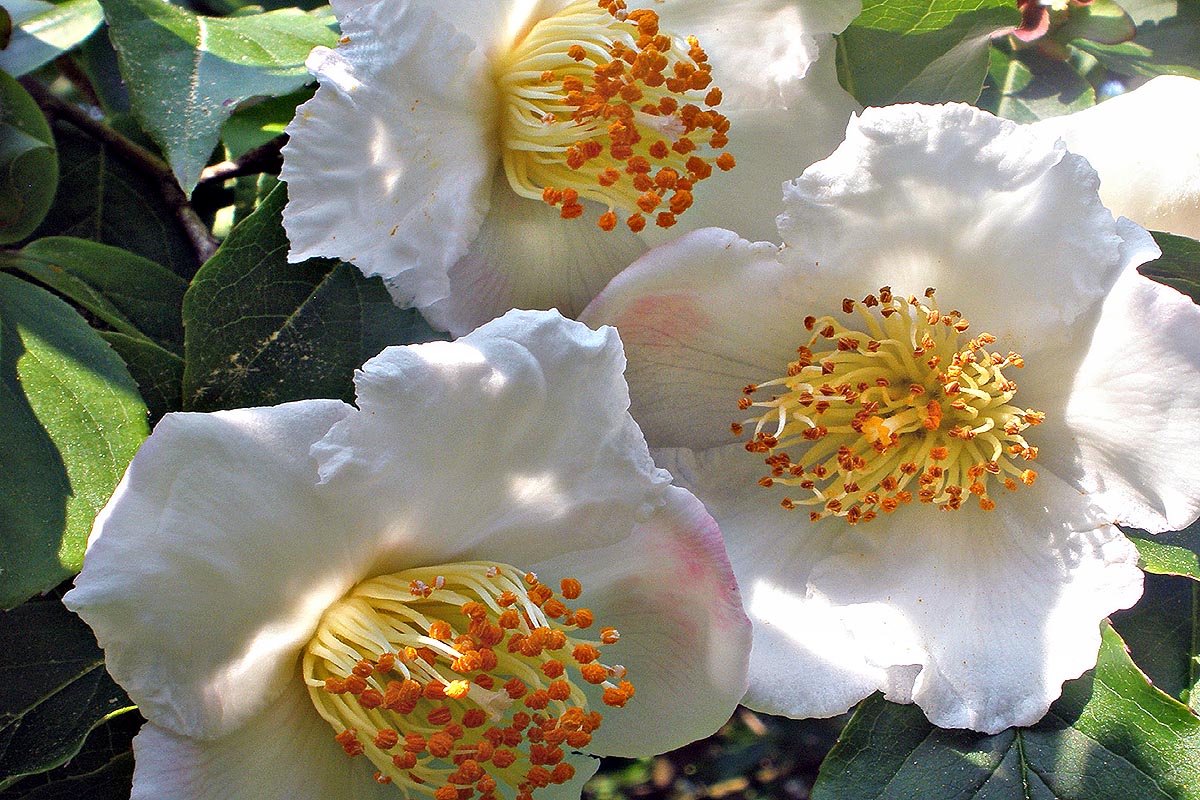
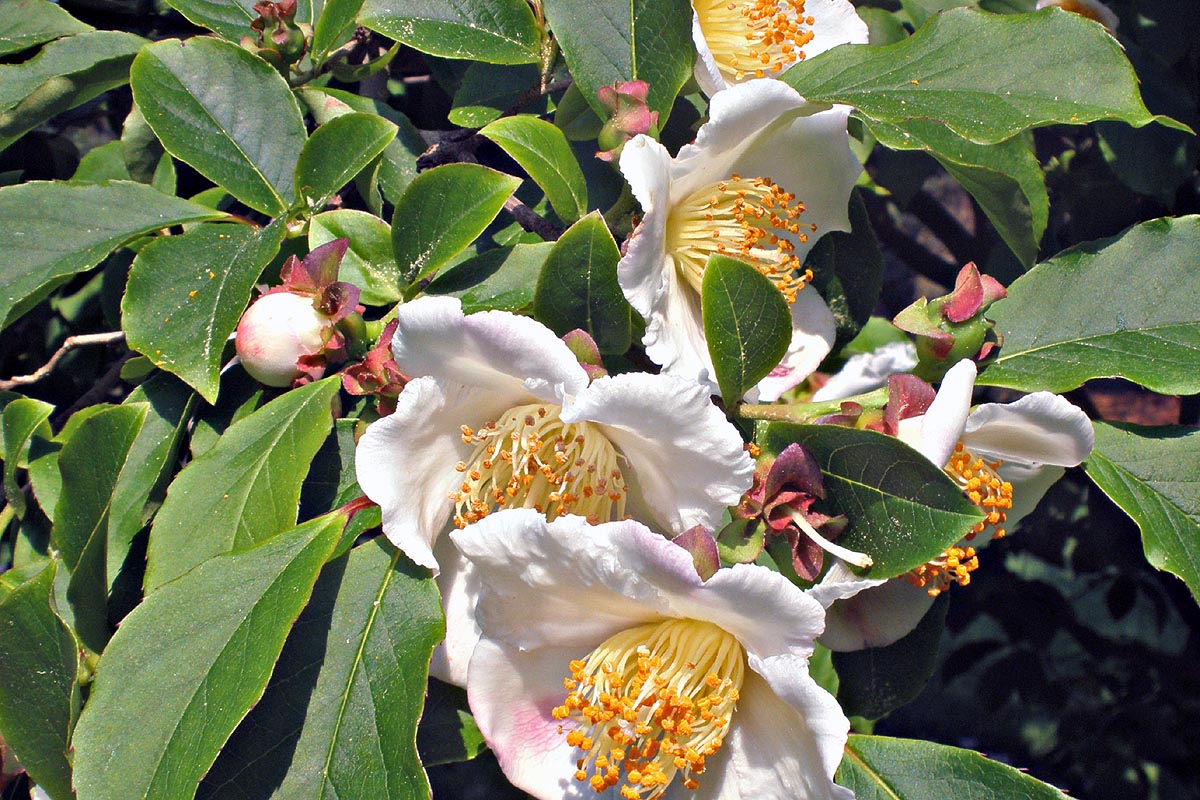
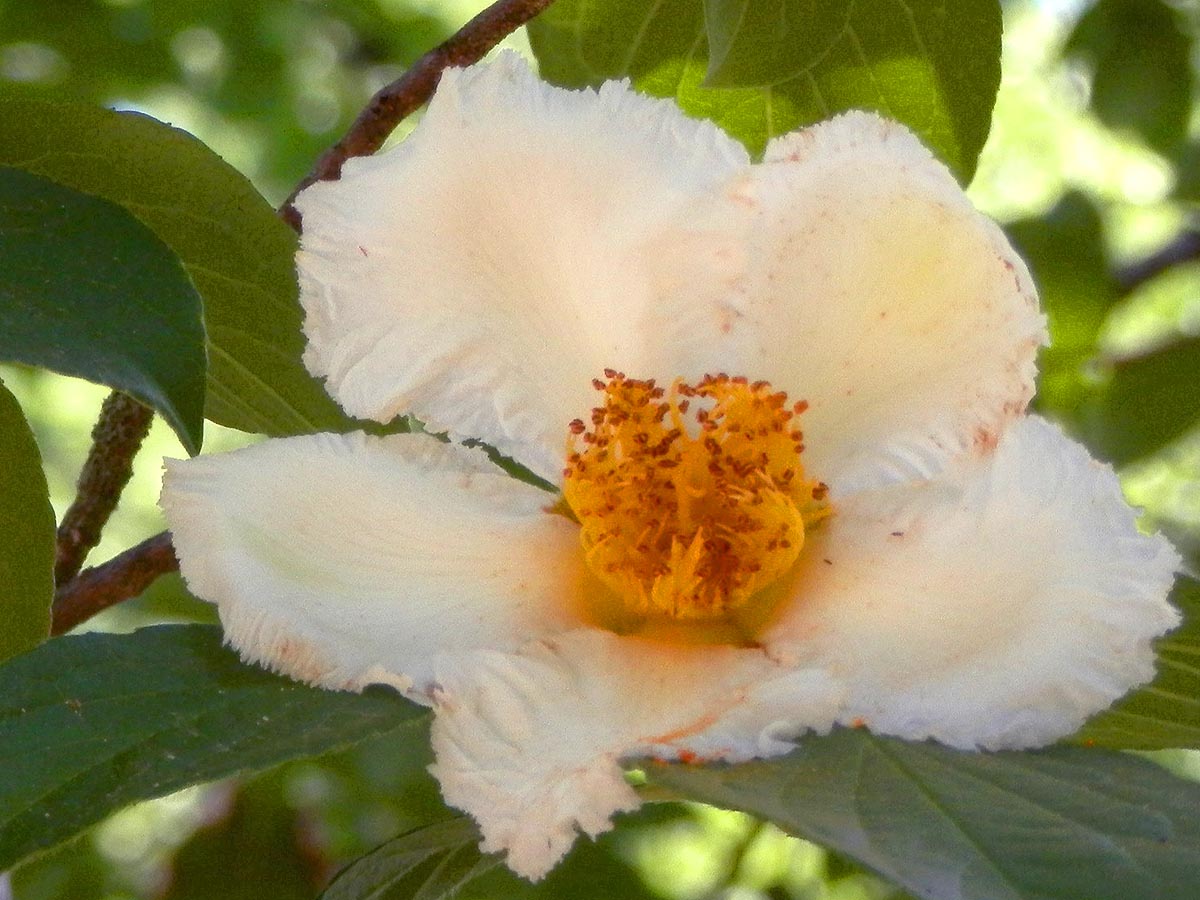
The tree for all seasons. This small to medium deciduous tree has it all. The bark of this tree is beautiful. Semi smooth it is covered in irregular patches of gray, red, brown, and tan often with other colors mixed in. During the winter months it can offer beauty where other trees do not. The mid green leaves offer a beautiful contrast to the bright white flowers with sun yellow centers each about 2 inches (6 cm) across that occur intermittently throughout the summer months. Its not a mass flower tree but it always has a few blooms. When fall/autumn arrives the leaves turn beautiful colors from purple, yellow and red often on the same leaf and give a beautiful display. This tree is very long lived hardy from zone 5-8 will grow in dappled shade for most of its range and is resistant to honey fungus. It does not do well in drought conditions so its not a tree for areas of low rainfall without supplemental watering. Does take some effort to get the seeds to germinate but the tree is well worth it.
Growing Japanese Stewartia (Stewartia pseudocamellia) from Seed.
Seeds are fussy they first need warmth followed by cold stratification. All our seeds have completed the warm period and are now stored in cold moist conditions. Seeds need a period of at least 3 months cold stratification so the process most likely will not be complete when seeds are purchased and will need completing.
If ordered in fall/autumn seeds can be sown outside (not recommended) or placed in pots or seed trays and left outside or in a cold structure like a shed or garage (recommended). If ordered later the process can be completed using your refridgerator. Refer to our Stratification Instructions to choose the best method for your needs.
Once stratification is completed place seeds in a cool location with plenty of light and keep moist. Germination can still be quite erratic so patience it needed. Some seeds can be stubborn and refuse to germinate until the second year. Keep pots in sheltered area and wrap in plastic to ensure they are kept moist during cold periods..
Once germinated seedlings are slow growing and may need to be nursed in their pots until the second season before they are planted out. If so place in the window of a garden shed, garage or cold frame for the winter and keep moist. Move outside as soon as the temperatures rise enough and grow on until at least 6 inches (15 cm) tall before planting out. Take care not to disturb the roots too much when planting out this may stunt further growth. Mark the trees well and protect the new seedlings from wildlife and lawn mowers.
Light. For zones 5-6b full sun is good and tolerated well. For zones below this place where it will be protected from moon sun and receive morning and evening sun. In zone 8 it would do better in dappled shade of other larger deciduous trees. Often grown against walls in zones 6b or warmer. Walls should face west or east and have some protection from the noon sun in zone 8 a north facing wall would be good.
Soil. It is not drought tolerant and needs a soil that will retain moisture but not be wet. A good rich humus loam soil is the best but will tolerate others provided it has been amended with compost and there is good drainage. While it likes moist soil it will not tolerate wet or waterlogged soils.
Water. If soil tends to dry out quickly then extra water will be needed. A soaker hose around the base is ideal. Mulch the trees well to keep the moisture in or grow grass or other good ground cover beneath the trees. Do not use a ground cover that demands water as it will stress the tree. Does well in areas of sufficient rainfall but may need supplementing during drought.
Ongoing Care. Very little. Removing any dead branches is about the only thing. The tree tends to branch early providing a wide crown of branches. If grown against a wall it may be pruned and trained flat against the surface and takes very well to this style. It also shows off the flowers to stunning effect.