




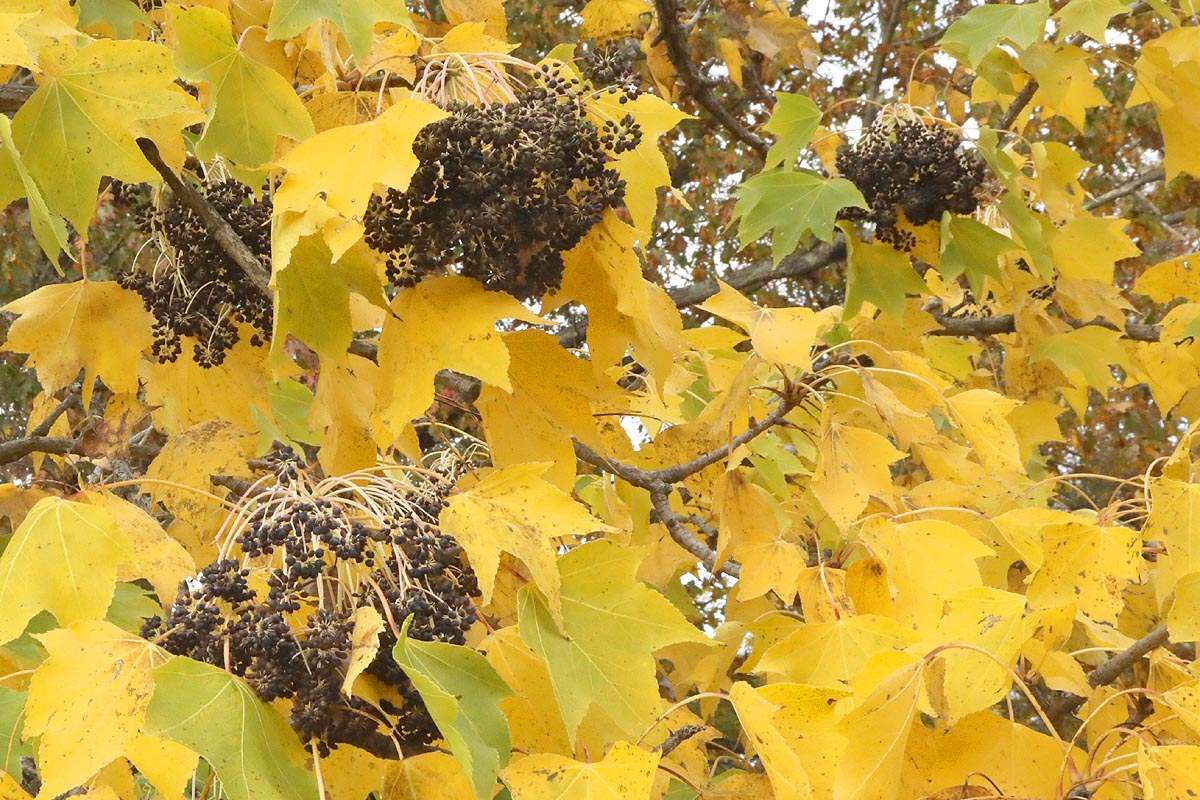


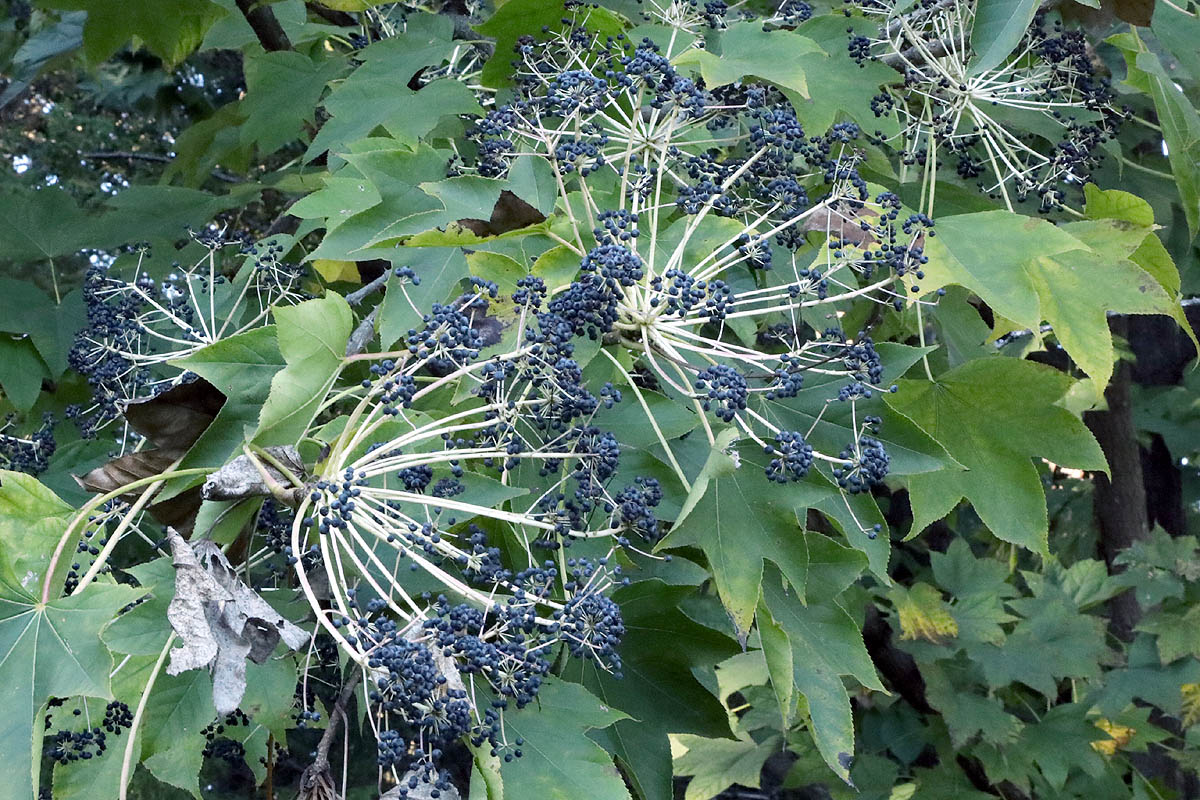
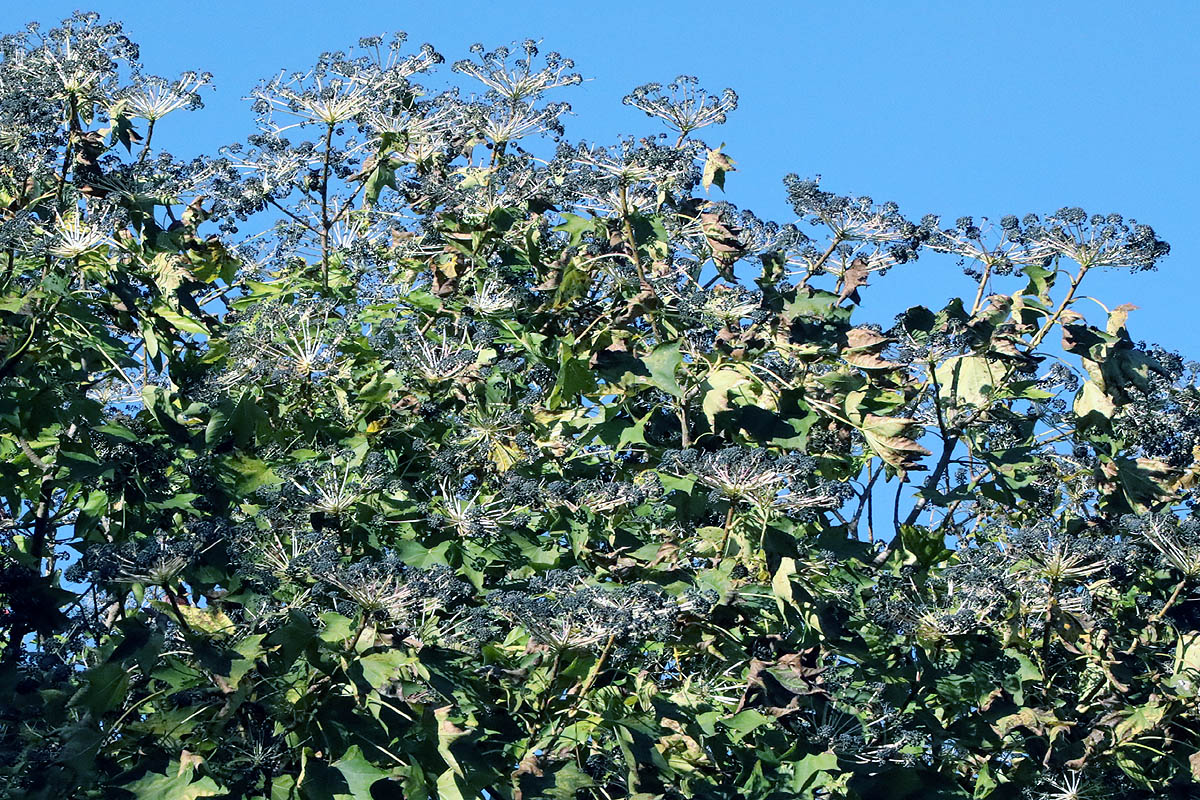
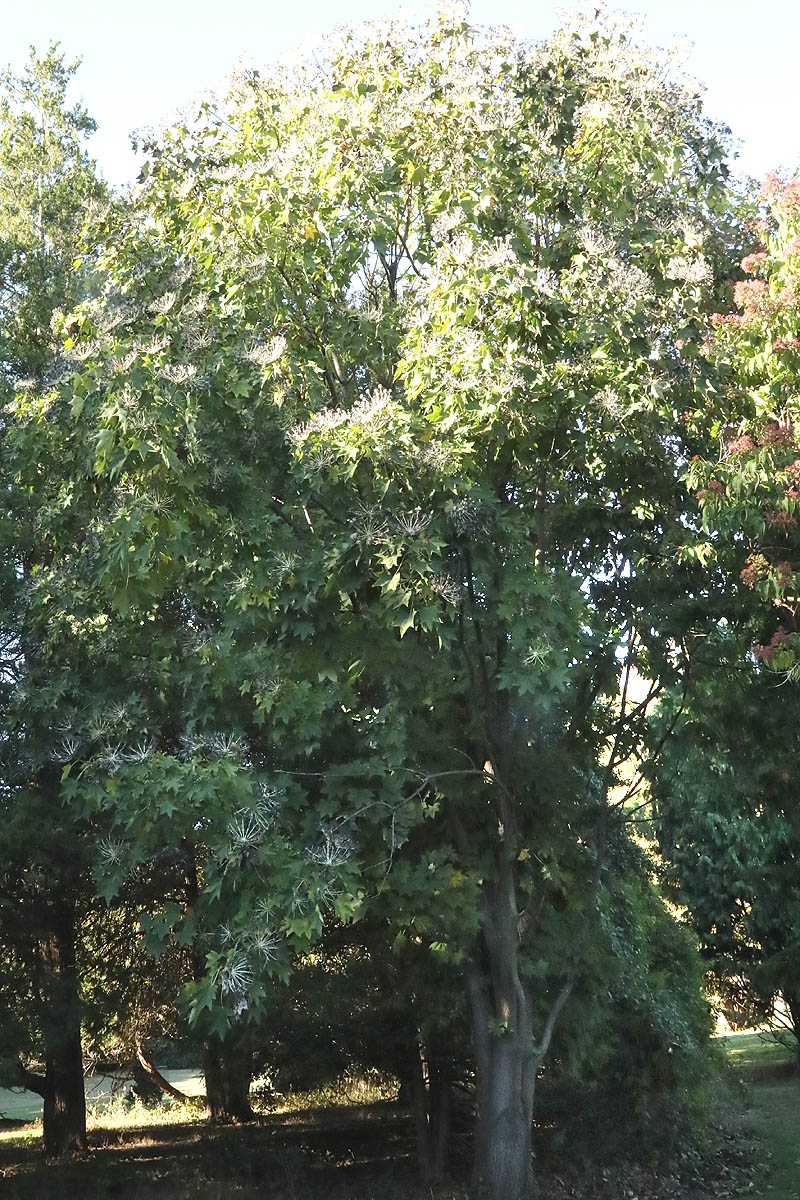
One of the truly stunning ornamental to shade trees for northern areas. This tree produces large starburst like panicles of small white flowers in summer each group 12-24 inches (30-60 cm) across that can cover the tree. While each flower is small the overall look can be stunning. The flowers are followed by blue black berries in the same large clusters these appear just when the leaves turn a stunning bright yellow making the contrast amazing so the tree looks like it was decorated for Christmas.
Once established needs little maintenance hardy to zone 4 but does not do well in warm humid south east US. Not very drought tolerant but the young shoots and leaves are harvested in spring as a seasonal vegetable which is much prized in Korea and Japan.
If using the refridgerator to complete your moist stratification we recommend using the Egg Box Method to keep seeds separated, minimize the space used in the refridgerator and keep the seeds safe and unharmed.
Once seeds have been stratified plant in small pots or cell trays to ensure that germinating seedlings do not disturb their still slumbering brothers and sisters when they need to be transplanted. Place in warm location no more than 74 F (24C) in medium light not in full sun and not directly under a grow light. Seedlings need medium light as they are used to growing on shaded forest floors. Keep soil moist but not wet. Small trees grow slowly to begin with as they develop their roots first. Once large enough they can be placed outside in a shaded area to grow. DO NOT PUT IN FULL SUN.
Depending on your location trees may not be large enough to be transplanted out the first year. If so ensure that pots are placed in a location such as a garage for the winter months where pots cannot freeze solid. While trees can withstand freezing in the ground they dont do as well in frozen pots above the ground. If necessary pots can always be sunk into the ground for the winter months. Again not in full sun.
Light. while mature trees do well in full sun in colder zones 7 and warmer partial shade is also possible. In all cases small seedlings do not tolerate full sun. Young trees have evolved to grow on the forest floor so do very poorly in full sun. Shade should be provided until the trees are at least 36 inches (1m) tall although this may vary, in colder zones with less light should be able to expose trees to full sun at smaller sizes while those in warmer zones 7-8 most commonly will need to shade trees for longer.
Space. Trees always need space and this one is especially important if used as an ornamental as its shape will not fully develop if crowded by other trees. Grown alone as a Specimen tree it can be stunning and very remarkable. This is especially important in warmer zones where airflow to allow cooling breezes will be especially important.
Soil. Prefers deep fertile soil that will retain moisture but not one that is waterlogged. If you have a poorer soil create a larger hole before planting and mix in a large amount of well rotted compost before planting. It can tolerate a wide range of pH but some mulch to help mediate this would be beneficial especially in poor soils.
Water. Ensure that small trees are watered regularly. This is not a drought tolerant tree and will need to be tended during periods of drought or growth will be stunted. Very prolonged drought could kill the tree.
Mulching. All young trees will benefit from mulching to keep the soil around them moist. Ensure that mulch is not piled against the trunk, keep it at least 6 inches (15cm) away to prevent mold, and rodent damage. Protect trunks from mower damage.
The bark and leaves contain substances (saponins, phenolics) with insecticidal or acaricidal properties. Folk preparations use the mashed bark/leaf as a spray or ointment to repel or kill pests such as termites, lice and ants.
synonyms: Kalopanax pictus, Acanthopanax ricinifolium, Acer pictum