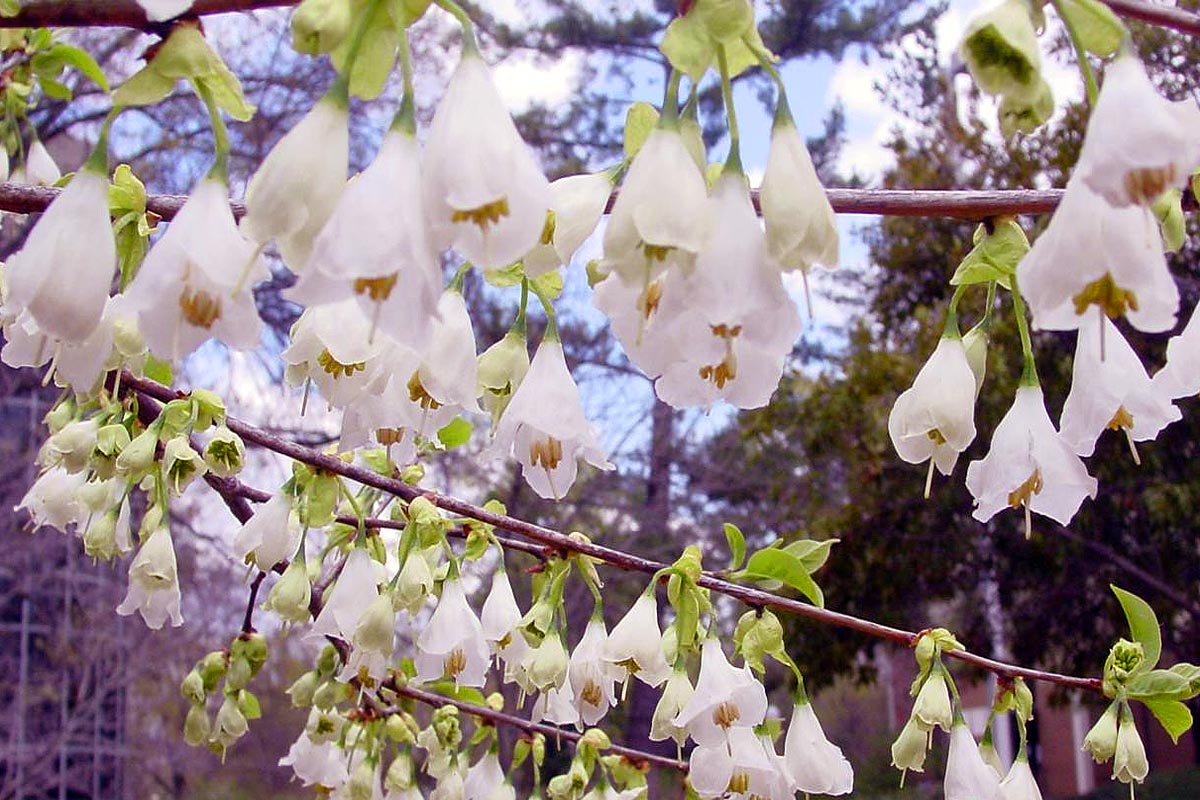
A tree for abundant spring flowers. They often cover the whole tree in one inch long bell flowers that produce a beautiful fragrance. The high nectar also attracts masses of butterflies and hummingbirds as well as native bees. Growing to 40 feet (12m) this tree is hardy from zone 4-8. While its better in full sun in the cooler end of its range (4-6a) it does better with some dappled shade in warmer zones. It needs water and is not drought tolerant so does not do well in arid areas but in those that have abundant moisture it can be delightful. The seeds do take a little extra work to germinate so patience is needed. Its an odd plant in that the seeds only germinate on the surface they don't like to be buried.
Description of Carolina Silverbell (Halesia carolina).
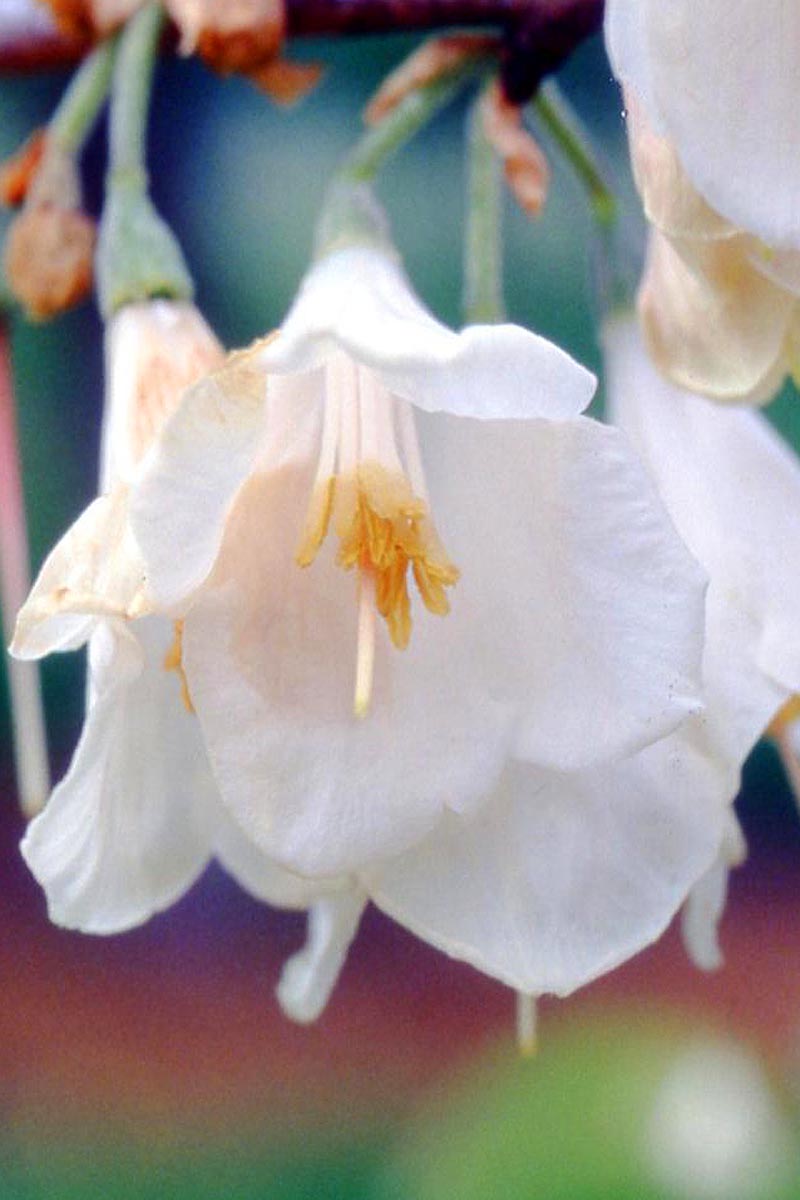
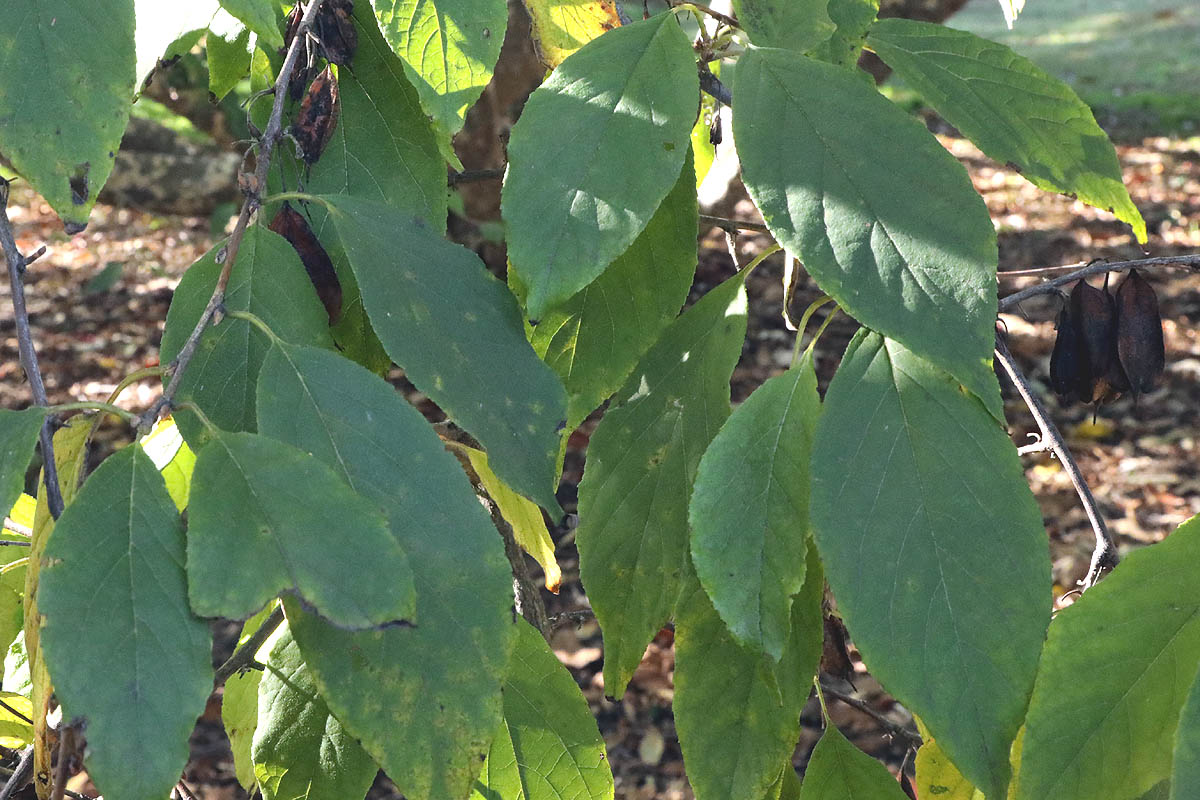
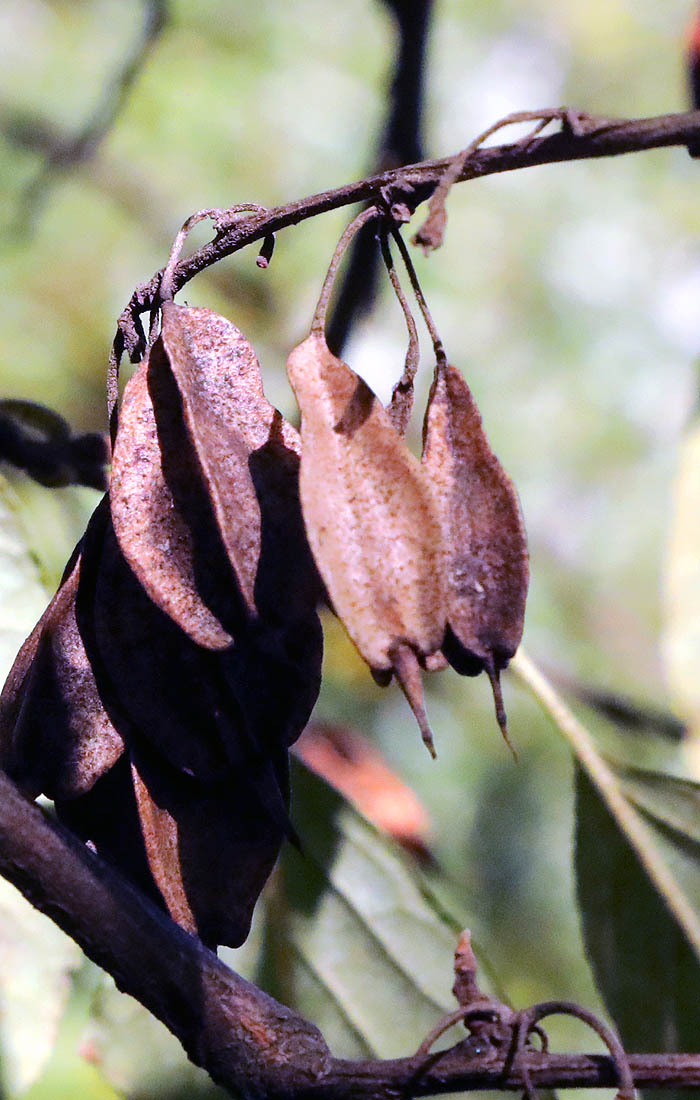
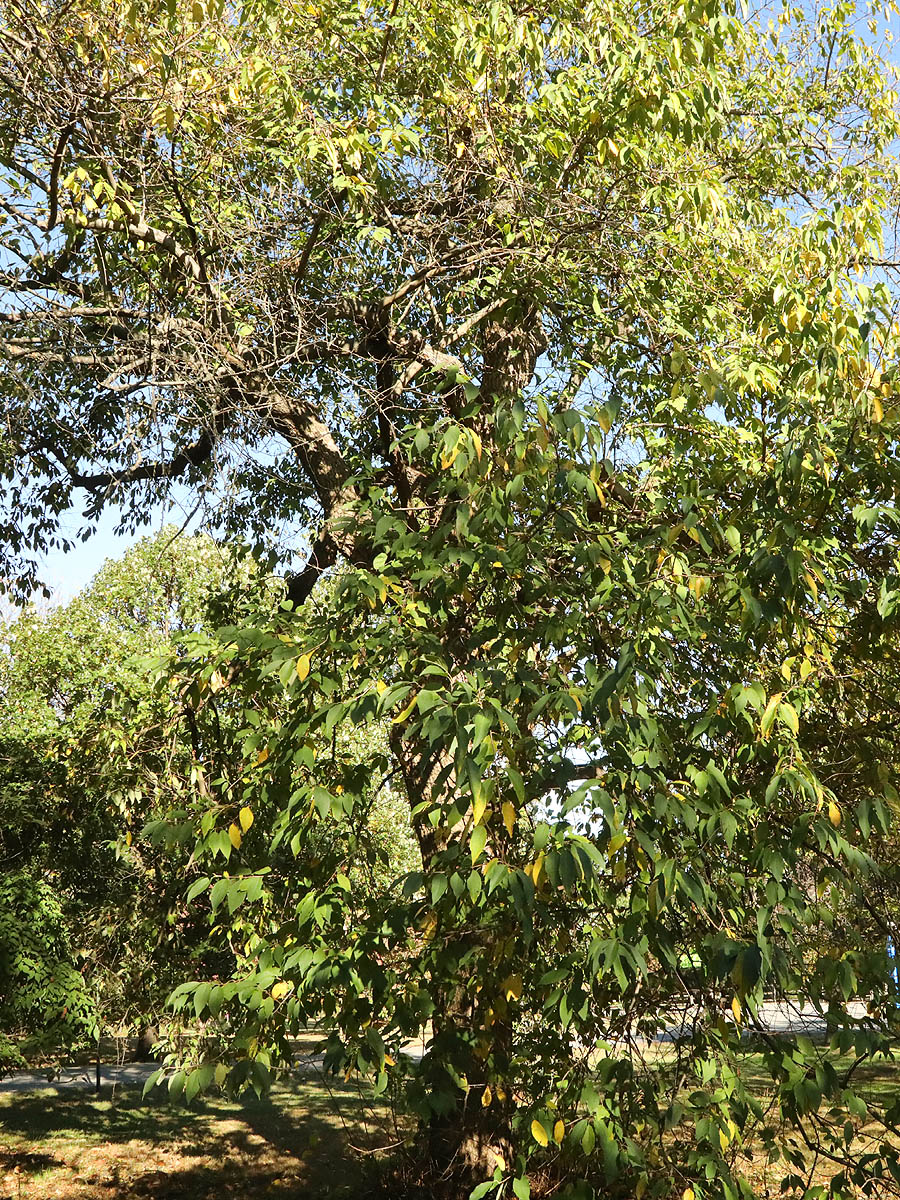
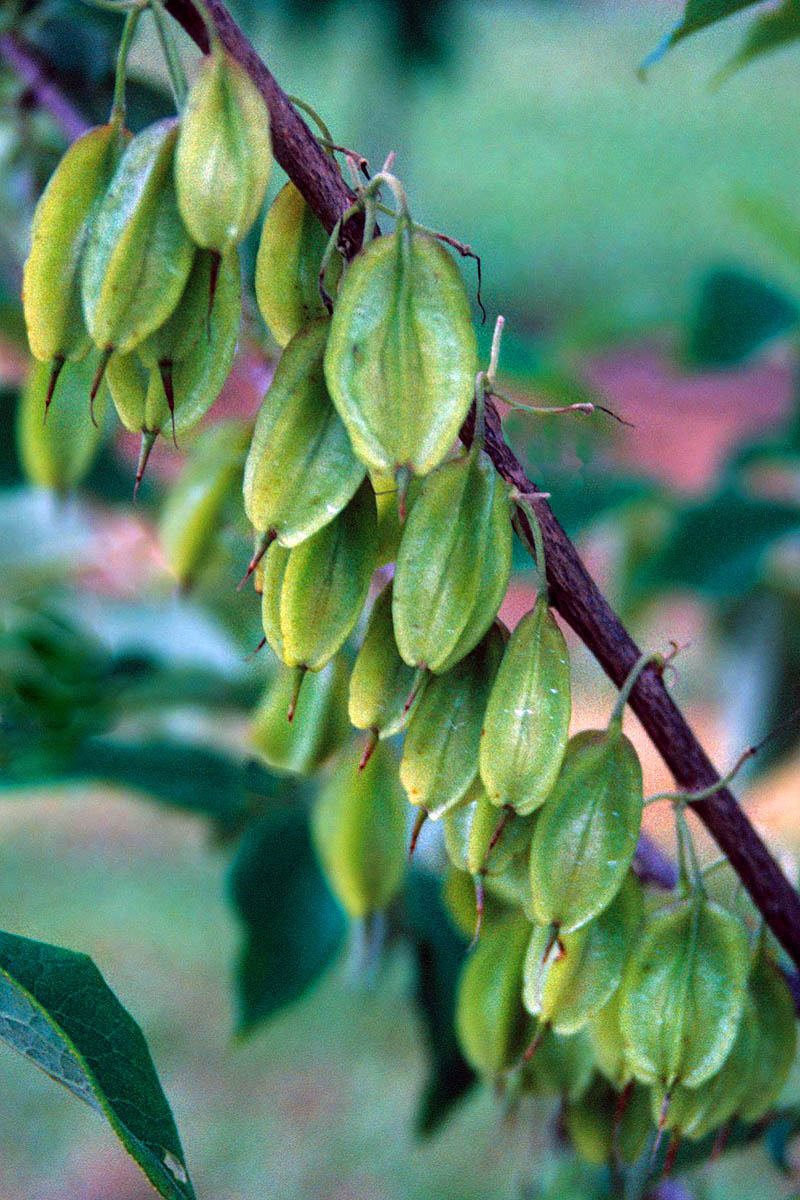
Deciduous tree growing to about 20-40ft (6-12m) with a broad rounded crown and most commonly a single trunk in specimens growing alone in full sun. Young trees have a smooth gray bark but with ages it becomes furrowed or scaly, developing creamy fissures. The leaves are elliptic in shape with pointed end 2-5 inches (5-13cm) long with a finely toothed edge and pointed tip. They are arranged alternately on the stems, yellowish green in color , turning to pale yellow in autumn/fall. In spring just as the leaves are emerging a bright spring green the flowers emerge in small clusters along the branches. Each flower is bell shaped about 0.5-1 inch (1.3-2.5 cm) long with four fused white petals forming an umbrella like shape around the stamens and pistil. Flowers bloom for several weeks and can cover the whole tree like late falling snow. They are followed by distinctive fruits each about 1- 1.5 inches (2.5-4cm) inches long, oval shaped with four hard papery longitudinal wings around the center. Fruits often remain on the tree throughout the winter, most contain a single stone like seed but they can contain 2-3 seeds in individual chambers. Fruits begin green and mature to a reddish brown offering winter interest to the now bare tree.
Growing Carolina Silverbell (Halesia carolina) from Seed.
Seeds need special treatment or they will wait up to two years before they will attempt to germinate. Seeds need a period of warm moisture for at least 60 days although 90 is preferred, this is followed by cold moisture for another 60-90 days. After this seeds can be encouraged to germinate but need to be sown on the surface NOT buried as they produce shoots before roots. However seeds can still be erratic and take some while to germinate so patience is required.
At present we are not preparing our seeds they are all kept under cold conditions so you will need to create this process yourself.
Direct sowing.
We do not recommend this method because seeds are fairly large up to 0.5 inches (1.2cm) long and they need to be sown on the surface not buried. This makes very obvious to wildlife who are eager to eat high energy seeds in the winter months. It makes likelihood of germination very low.
Jug sowing.
Another method is to use a plastic gallon bottle, used for juice or water. Partially cut the top so it can be opened like a lid. Fill the bottom of the container with sterile soil to prevent other seeds and molds from forming and then place the seeds on top. Water until moist then replace the lid and sit outside in a stable area and leave for the winter. Check frequently to ensure it does not dry out. Leave throughout the winter to allow it to 'experience' the natural cycle but keeps any wildlife from eating the seeds. Make sure you label the jug so you know what is in it and check on a regular basis until the seeds germinate. This could take up to two years depending on when you started the process.
Artificial Sowing process.
when seeds arrive place them in moisture at room temperature. The easiest method is to place them in damp sterile sand, not wet in a container somewhere in your home that does not get too cold. Label them so you remember what they area and check every now and again so they don't dry out. Do not use garden soil even if your soil is sandy as it will contain many other seeds and mold spores that will grow under damp conditions. Play sand from the home improvement store is ideal. Do NOT use sand from ocean beaches it contains too much salt. If you do have sandy soil you can prepare it by placing in a glass container in the microwave for 10 minutes on high to kill anything in the sand. Allow it to cool down well before you try and remove it as it will be very hot.
After 60-90 days take the container and place in the refridgerator and again keep moist. We recommend using a small plastic sandwich box or food storage container with snap on lid. If soil is sterile it will not produce mold throughout this process. Again leave in the cold for 60-90 days. If you would prefer to use a different method to stratify please refer to our Stratification Instructions to choose the best method for you.
Once the cold phase is over remove the seeds and place them on good potting soil that is kept moist and place in warm light area. Ensure that the soil does not dry out and keep watch. Do NOT bury the seeds they must be sown on the surface. The leaves emerge first before the roots making it a very unusual seed.
Once seeds have germinated and produced some roots carefully remove them to their own pots. Tall pots are recommended so the little trees can establish roots. You can either purchase tree pots or use make your own from cardboard juice or milk cartons. These make idea tree pots just ensure you punch some holes in the bottom to allow for drainage and remember to cut the pot off when its time to plant outside.
Move growing plants to a lower sun area to begin with and gradually move to full sun. Plant out in ground when trees are no less than 8 inches (20cm) tall. Mark the area well and protect from wildlife and accidental removal or lawn mowers. Water well for first year.
Location and Care of Carolina Silverbell (Halesia carolina).
Trees are hardy from zone 4-8 with different requirements for zones. While it can endure cold severe winters may kill the younger shoots and small twigs. Late freezing can also inhibit flower development as it can kill the young shoots.
Soil. Prefers a slightly acidic soil with lots of rich organic material. Adding a lot of compost to the area around where the tree is to be planted will aid its development. If tree needs a 6 inch (15cm) hole then dig one 24 inches (61cm) at least and backfill with a mixture of rich compost and native soil. Stamp down well to avoid later sinkage and plant tree in the center. Does not do well on alkaline soils, the leaves will turn yellow and look sick.
Soil must be well draining it does not like wet feet. Does not tolerate salt well so do not plant near the shore or along roadways that get salt treatment. Cannot tolerate compacted soils so not for use as a street tree or in wet areas.
Light. Will depend on your zone. In zones 4-5b full sun is good but it can take a little light shade. In zones 6-7a it can do well in full sun but some dappled shade or at least not all day sun is recommended for best flowering. While it can survive in deeper shade it will not flower well.
In zone 8 more shade is recommended, north sides of buildings or close to other trees for some shade is ideal. This should provide sufficient shade but also allow the tree to bloom well.
Water. It needs water and is not drought tolerant. While mature trees may survive a mild drought young trees will not and need constant moisture. If rainfall is low in your area plant near a pond or stream to ensure it has plenty of water. Mulch the ground around the tree to keep moisture in and soil moist. Water on a regular basis if soil dries out regularly. However it cannot tolerate wet or waterlogged soil.
Pollinator and Wildlife with Carolina Silverbell (Halesia carolina).
The abundant flowers are high in nectar and a great attraction for butterflies, hummingbirds and all kinds of native bees as well as other pollinators.
Medical uses
none known at present
Other names.
Carolina silverbell, small-flowered silverbell, mountain silverbell, snowdrop tree, snowbell tree, silver bell, opossum wood, shittimwood