





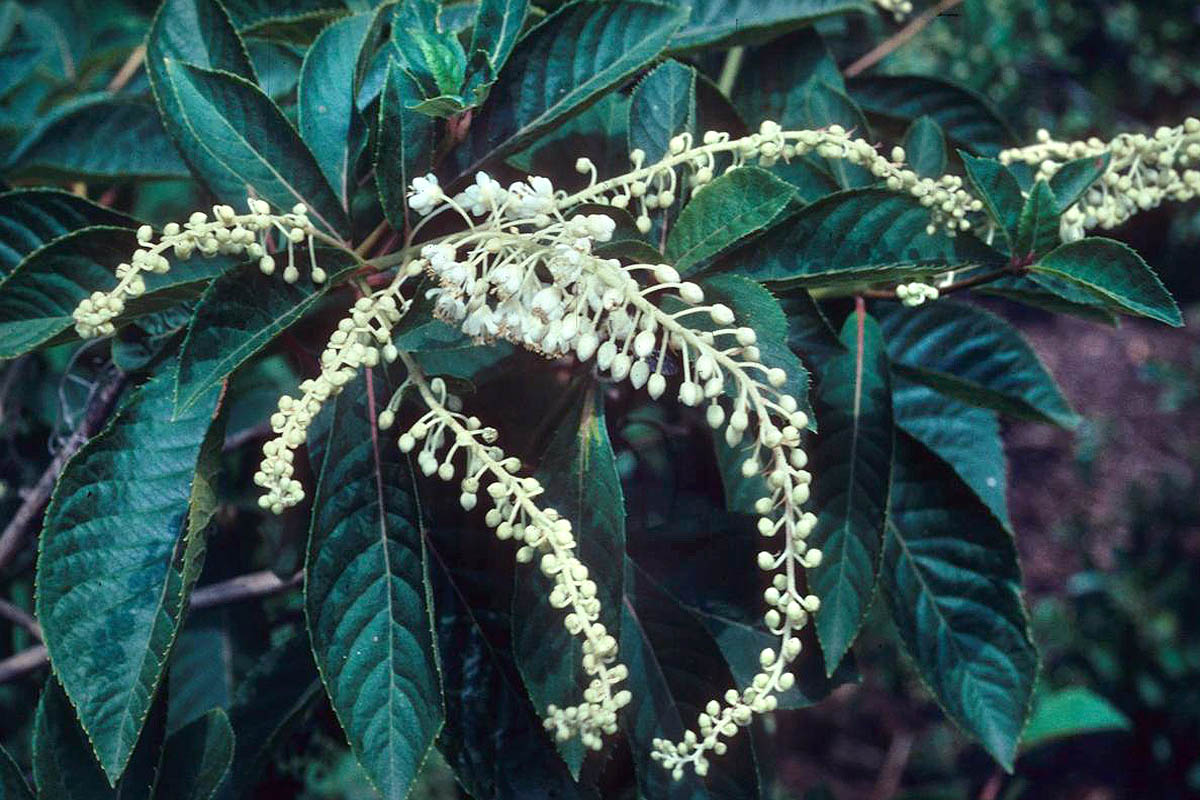
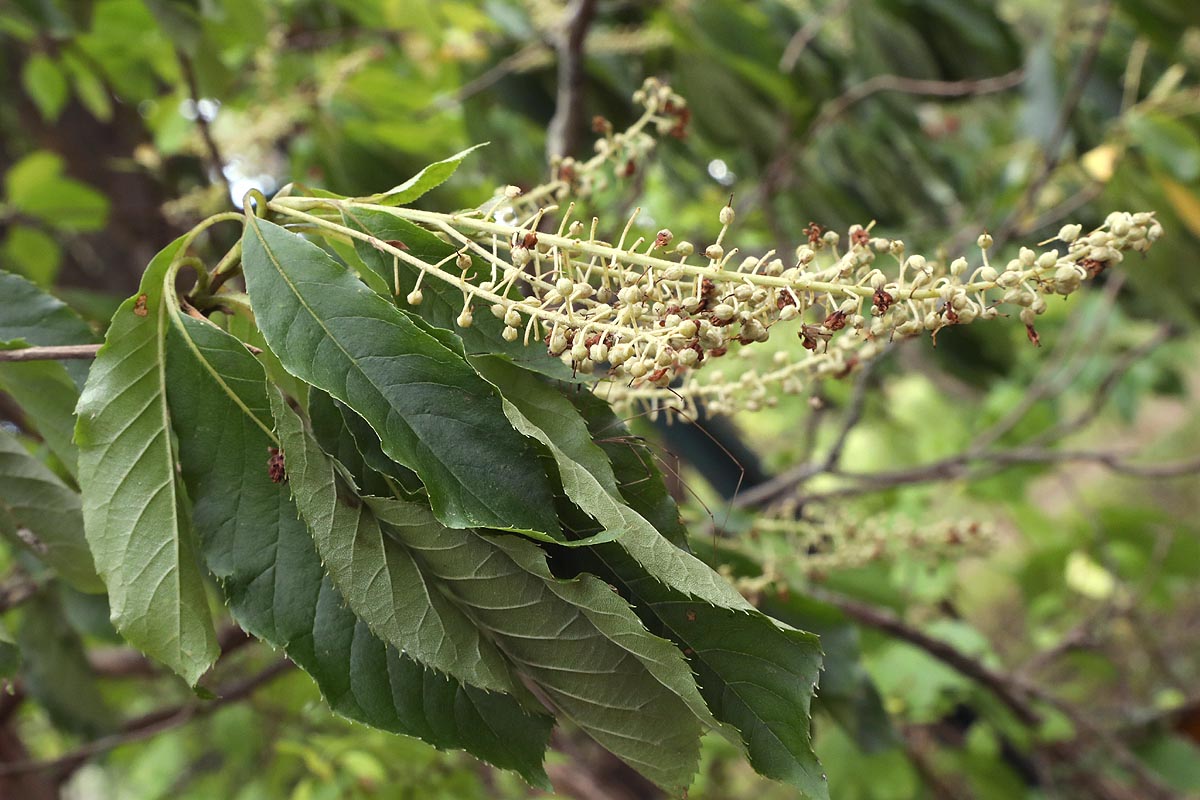
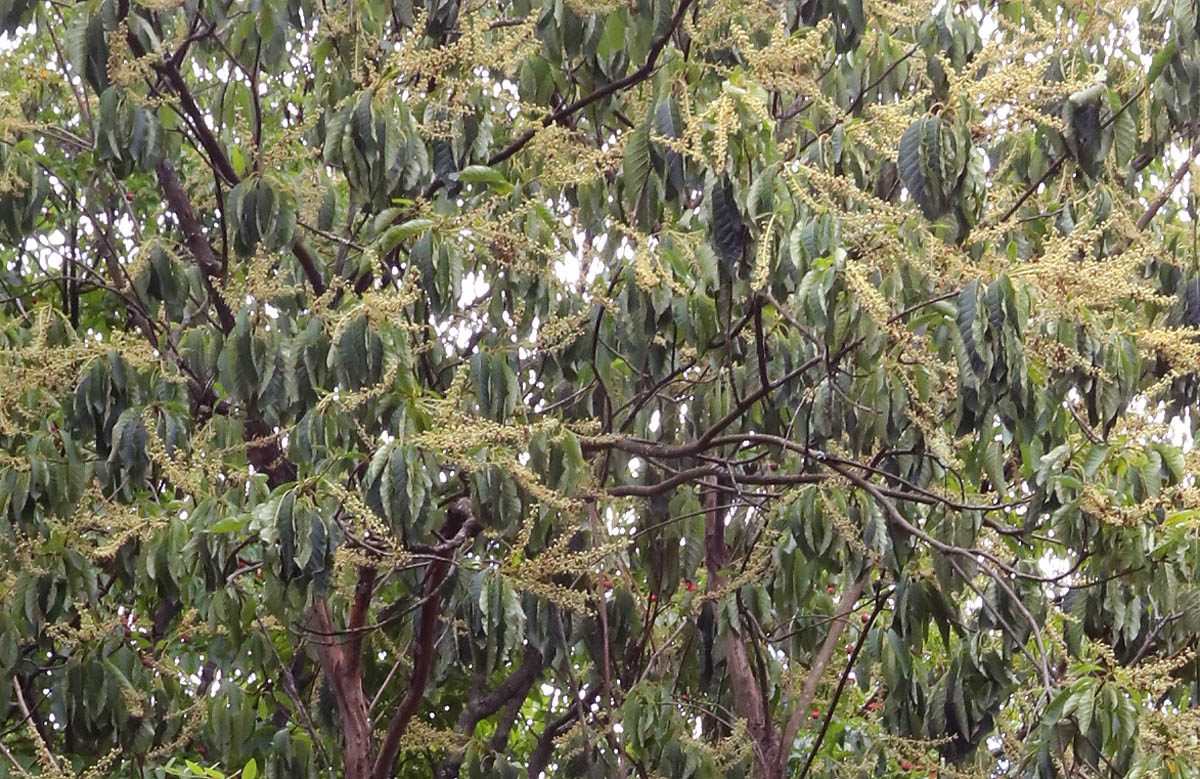
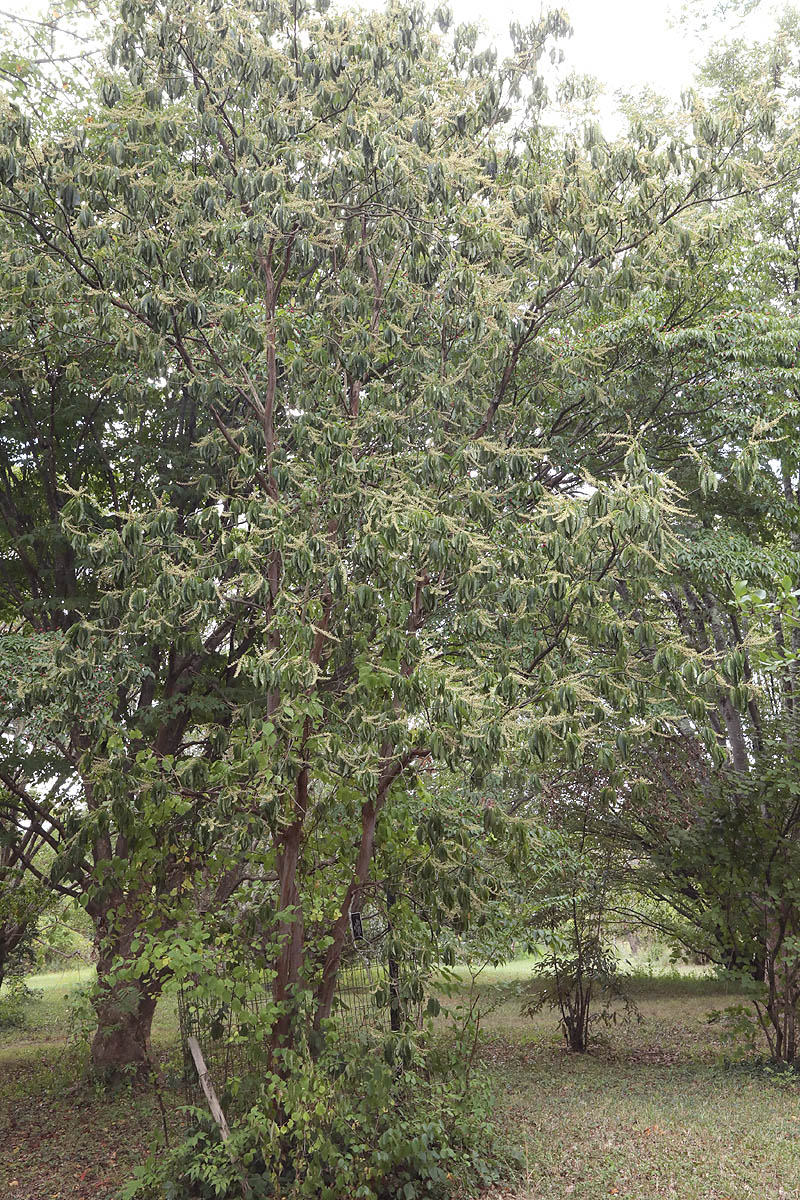
A delightful shrub hardy from zones 5-8 that produces long dangling panicles of small white flowers in summer that persist for several weeks and provide a delightful sweet aroma that can carry across the garden. While its normal shape is a multi trunked shrub it can be pruned into a tree where it may reach 32feet (10m) in height. Prefers moist soils and is perfect for edges of streams, lakes, and rain gardens. the foliage contains some bitter compounds so its not eaten by deer or other browers but it is host to a few native butterfly and moth larva. The flowers contain rich nectar and are a magnate for butterflies, bees and humming birds. Fairly easy to grow from seed just a little patience needed as seeds can be slow to germinate.
In summer from the ends of the branches appear. Long thin stems often in clusters and sometimes branching with many individual tiny white flowers on their own stems. Each flower is white with five free petals in a star shape with longer yellow stamens protruding out past the petals. The flowers give off a delightful sweet fragrance which gives the plant its name. Flowers are followed by small brown capsules containing seeds that will persist on the bush until the following spring.
Growing Japanese Summersweet (Clethra barbinervis) from Seed.
Very easy to grow from seed but it does take a little patience. While they do prefer a period of cold before all our seeds are kept in cold conditions so this step is done for you. Most important is to not cover the seeds as they need light to germinate. Scatter on fine sterile seeding mix and then gently mist seeds using a hand spray bottle. This will ensure that the seeds have good contact with the seed medium. Continue to spray water seeds until germination begins. Summersweet is slow to germinate and can take anywhere from 1-3 months. Once seedlings reach 0.5-1 inch (2-3 cm) transplant into individual pots and grow on. Seedlings are slow starters and most likely will need to remain in pots until their second year. Overwinter in cold frame or in the window of an attached garage or shed. This is enough to keep the pots from freezing. Ensure pots stay slightly moist throughout the winter. Transplant outside when the plants are taller than 8 inches (20cm) and only after the last frost has departed.
Light. Will depend on your zone. In 5-6b full sun is recommended. In zones 7-8 some shade is suggested especially zone 8 protect from noon sun and offer morning and evening sun if possible. North sides of buildings, hedges or other shade options is recommended for best flowering.
Soil. Thrives best in moist humus-rich, slightly acidic soils. Does not do as well on sandy or poor soils and alkaline soils may cause chlorosis (yellowing of leaves). If you have these soil types add a large amount of compost to the selected area before planting and mulch on a yearly basis.
Water. While Summersweet prefers a well draining soil it does like moisture so will flourish on the edges of rain gardens, beside streams or lake and other bodies of water. Its thick web of roots can help to stabilize stream banks. If planted away from water mulch well to help keep moisture in the soil and use a soaker hose around the base to water on a regular basis. Once established watering can be reduced and will show moderate drought tolerance.